A young boy runs in the playground. After a few minutes, he starts coughing and feels tightness in his chest. His doctor says he has asthma. In another case, an older man who smoked for many years finds it hard to breathe even while resting.
The doctor tells him he has emphysema. Both people have breathing problems, but their diseases are not the same. This situation shows the difference between asthma and emphysema.
Many people think these two lung problems are the same. However, the difference between asthma and emphysema is clear in cause, symptoms, and treatment. Asthma often starts in childhood and involves airway inflammation.
Emphysema usually develops later in life and damages lung air sacs. Understanding the difference between asthma and emphysema helps patients, students, and healthcare workers recognize symptoms early.
Learning the difference between asthma and emphysema also helps people take better care of their lungs.
Key Difference Between the Both
The main idea in the difference between asthma and emphysema is:
- Asthma: Airways become inflamed and narrow, but the condition can improve with treatment.
- Emphysema: Air sacs in the lungs are permanently damaged, making breathing difficult.
Why Their Difference Is Important for Learners and Experts in Society
Knowing the difference between asthma and emphysema helps people understand lung health. Students in medical and health fields must learn these diseases clearly. Doctors and nurses need correct knowledge to give proper treatment.
In society, breathing diseases affect millions of people. When individuals know the difference, they can notice symptoms early and seek medical help. Public awareness also helps reduce smoking and pollution, which protects community health.
Pronunciation
Asthma
- US: /ˈæzmə/
- UK: /ˈæsmə/
Emphysema
- US: /ˌemfəˈsiːmə/
- UK: /ˌemfɪˈsiːmə/
A Short Bridge to the Main Topic
Now that we understand the basic meanings, let us explore the difference between asthma and emphysema in detail.
Difference Between Asthma and Emphysema
1. Nature of Disease
Asthma: A chronic inflammatory disease of the airways.
Examples:
- A child wheezes during exercise.
- A person coughs after breathing cold air.
Emphysema: A chronic disease that damages lung air sacs.
Examples:
- A smoker struggles to breathe.
- An older adult feels shortness of breath daily.
2. Main Cause
Asthma: Often linked to allergies, pollution, or genetics.
Examples:
- Dust triggers asthma.
- Pollen causes breathing difficulty.
Emphysema: Usually caused by long-term smoking.
Examples:
- Years of cigarette smoking damage lungs.
- Air pollution worsens lung damage.
3. Age of Onset
Asthma: Often begins in childhood.
Examples:
- A school child carries an inhaler.
- Teenagers experience asthma attacks.
Emphysema: Usually develops in adults over 40.
Examples:
- A middle-aged smoker develops breathing trouble.
- An older person struggles with lung capacity.
4. Reversibility
Asthma: Airway narrowing can often be reversed with medicine.
Examples:
- Inhalers open the airways.
- Symptoms improve after treatment.
Emphysema: Lung damage is permanent.
Examples:
- Breathing remains difficult.
- Lung function does not fully recover.
5. Symptoms
Asthma: Wheezing, coughing, chest tightness.
Examples:
- A person coughs at night.
- Breathing becomes noisy.
Emphysema: Shortness of breath and fatigue.
Examples:
- A person struggles to climb stairs.
- Even light activity causes breathlessness.
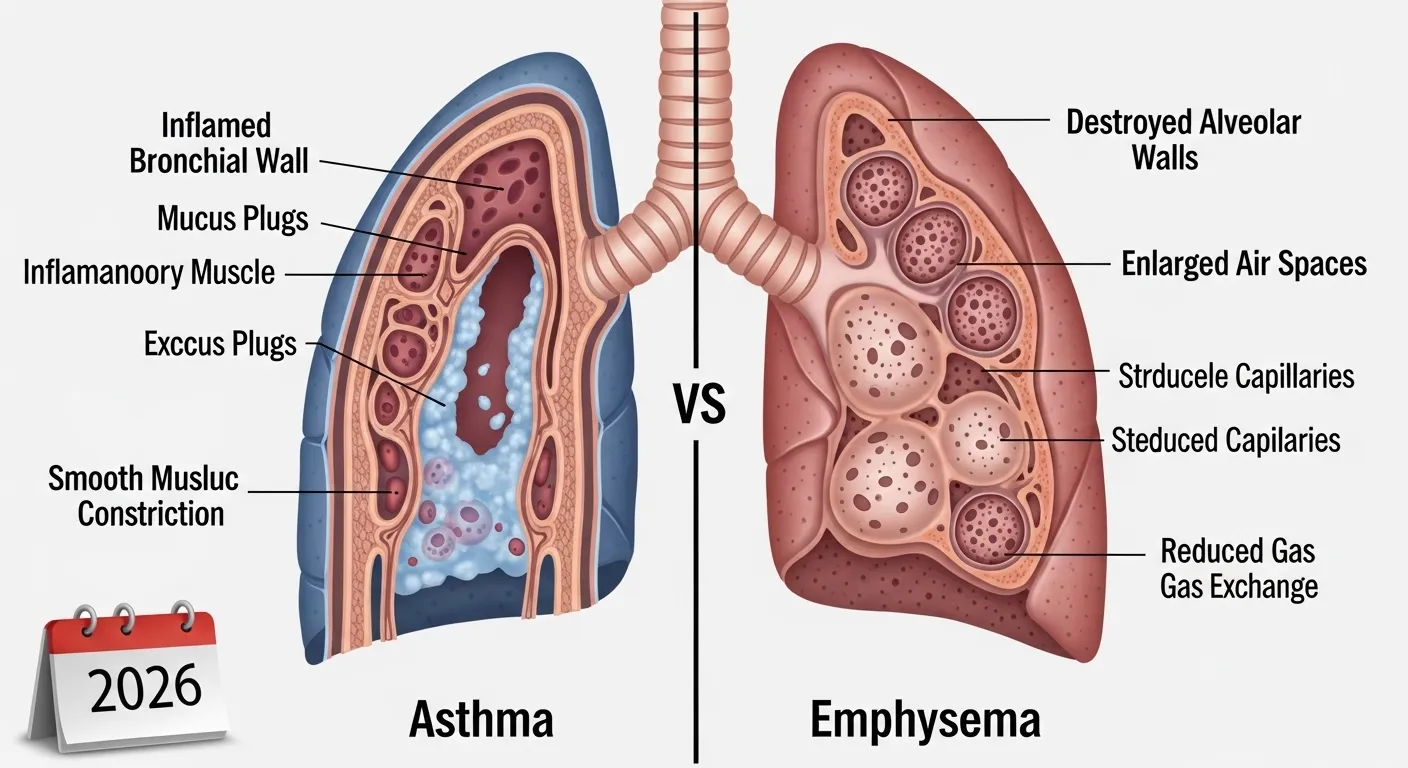
6. Lung Structure
Asthma: Airways become swollen.
Examples:
- Bronchial tubes narrow.
- Muscles around airways tighten.
Emphysema: Air sacs lose elasticity.
Examples:
- Air sacs enlarge and weaken.
- Oxygen exchange decreases.
7. Triggers
Asthma: Triggered by allergens or exercise.
Examples:
- Cold air causes an attack.
- Pet hair triggers symptoms.
Emphysema: Not usually triggered suddenly.
Examples:
- Breathing gradually worsens.
- Symptoms progress slowly.
8. Treatment
Asthma: Treated with inhalers and anti-inflammatory medicine.
Examples:
- A rescue inhaler helps during attacks.
- Steroid inhalers reduce inflammation.
Emphysema: Managed with oxygen therapy and lifestyle changes.
Examples:
- Oxygen helps breathing.
- Doctors advise quitting smoking.
9. Disease Progress
Asthma: Symptoms may come and go.
Examples:
- A person feels normal between attacks.
- Symptoms worsen only during triggers.
Emphysema: Symptoms usually worsen over time.
Examples:
- Breathing slowly becomes harder.
- Daily activities become difficult.
10. Prevention
Asthma: Avoid allergens and triggers.
Examples:
- Avoid dust.
- Use air filters.
Emphysema: Avoid smoking.
Examples:
- Quit cigarettes early.
- Reduce exposure to pollution.
Nature and Behaviour of Both
Asthma is an inflammatory airway disease. The airways tighten and swell, which causes breathing problems. However, with treatment, many people live normal lives.
Emphysema is a progressive lung disease. It damages the tiny air sacs in the lungs. This damage reduces oxygen exchange and makes breathing difficult.
Why People Confuse Asthma and Emphysema
People confuse these diseases because both cause breathing difficulty, coughing, and chest discomfort. Also, both affect the lungs. However, their causes, development, and treatments are different.
Table: Difference and Similarity
| Aspect | Asthma | Emphysema | Similarity |
| Disease type | Airway inflammation | Air sac damage | Both affect lungs |
| Onset | Often childhood | Usually adulthood | Both chronic |
| Cause | Allergies or triggers | Smoking | Both affect breathing |
| Reversibility | Often reversible | Permanent damage | Both need treatment |
| Symptoms | Wheezing, cough | Shortness of breath | Both cause breathing difficulty |
Which Is Better in What Situation?
Asthma
Asthma is generally more manageable than emphysema. With proper medication, many people control symptoms and live normal lives. Avoiding triggers and using inhalers can prevent serious attacks.
Emphysema
Emphysema is more serious because lung damage cannot be reversed. However, treatment can slow the disease. Quitting smoking and receiving medical care can improve quality of life.
Use of the Words in Metaphors and Similes
Sometimes these diseases appear in figurative language.
Examples:
- “The city air felt like asthma for the lungs.”
- “His breathing sounded like an emphysema patient.”
Such comparisons describe difficulty in breathing or polluted environments.
Connotative Meaning
Asthma
- Neutral medical meaning
Example: - She manages asthma with medicine.
Emphysema
- Negative medical meaning
Example: - Years of smoking caused emphysema.
Idioms or Sayings
These diseases rarely appear in idioms, but they sometimes appear in health awareness phrases.
Example:
- “Smoking steals your breath.”
Works in Literature (Health and Medicine)
- The Emperor of All Maladies — medical history book by Siddhartha Mukherjee (2010)
- When Breath Becomes Air — memoir by Paul Kalanithi (2016)
Movies Related to Lung Disease Themes
- The Insider (1999, USA)
- Thank You for Smoking (2005, USA)
Frequently Asked Questions
1. Are asthma and emphysema the same disease?
No. They are different lung diseases.
2. Can asthma turn into emphysema?
Usually no, but severe lung damage may increase risk of other lung diseases.
3. Is smoking the main cause of emphysema?
Yes. Long-term smoking is the main cause.
4. Can asthma be cured?
There is no complete cure, but symptoms can be controlled.
5. Which disease is more serious?
Emphysema is often more serious because lung damage is permanent.
How Asthma and Emphysema Affect Our Surroundings
These diseases raise awareness about clean air and healthy lifestyles. When people understand them, they avoid smoking and reduce pollution. Communities can also support better healthcare and environmental protection.
Final Words for Both
Asthma and emphysema both affect breathing, but they are very different diseases. Knowing their differences helps protect lung health.
Conclusion
The difference between asthma and emphysema lies mainly in their causes, effects on the lungs, and treatment. Asthma is an inflammatory airway disease that often begins in childhood and can usually be controlled with medication. Emphysema is a chronic lung condition that damages air sacs, most commonly due to long-term smoking. Although both diseases cause breathing problems, emphysema causes permanent lung damage, while asthma symptoms can often improve with treatment. Understanding the difference between asthma and emphysema helps people recognize symptoms early, seek proper medical care, and adopt healthier lifestyles to protect lung health.

I’m Zahid Abbas, an educator, researcher, and digital publishing strategist with a passion for linguistics, grammar, and clear communication. As a content creator and SEO specialist, I craft research-driven, reader-focused content that empowers learners and makes knowledge accessible worldwide.