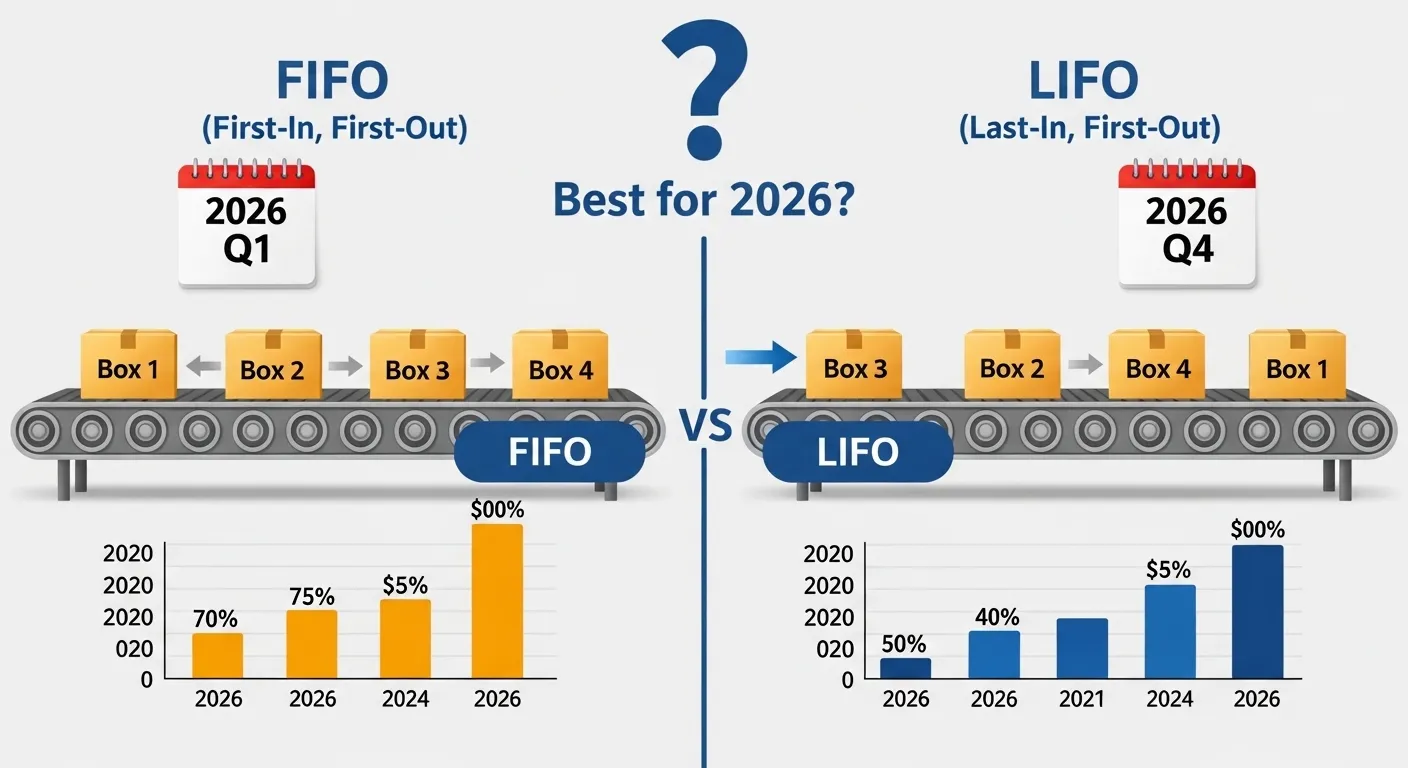
A shop owner bought 100 bags of rice in January. He bought 100 more in March. In April, he sold 100 bags. Which stock did he sell first? The January stock or the March stock?
This question shows the difference between FIFO and LIFO. In accounting and inventory, the difference between FIFO and LIFO changes profit and tax results. In business reports, the difference between FIFO and LIFO affects cost and value.
For students of commerce, the difference between FIFO and LIFO is a key concept. Both methods manage inventory, but they follow opposite order rules.
Pronunciation
- FIFO (First In, First Out)
- US: /ˈfaɪfoʊ/
- UK: /ˈfaɪfəʊ/
- LIFO (Last In, First Out)
- US: /ˈlaɪfoʊ/
- UK: /ˈlaɪfəʊ/
Now let us explore their meaning in detail.
Key Difference Between FIFO and LIFO
FIFO means the first goods bought are sold first.
LIFO means the last goods bought are sold first.
In short:
FIFO = oldest stock goes out first.
LIFO = newest stock goes out first.
Why Is Their Difference Necessary to Know for Learners and Experts?
Commerce students study cost methods. Accountants prepare financial statements. Managers control stock flow. If they mix these methods, profit results may change. In society, clear accounting builds trust in business. Experts must use the correct method for reporting and tax rules.
Difference Between FIFO and LIFO
1. Basic Rule
- FIFO: First stock sold first.
- Example 1: January rice sold before March rice.
- Example 2: Old milk sold before new milk.
- LIFO: Last stock sold first.
- Example 1: March rice sold before January rice.
- Example 2: New steel used before old steel.
2. Inventory Flow
- FIFO: Natural flow.
- Example 1: Grocery items.
- Example 2: Medicine stock.
- LIFO: Reverse flow.
- Example 1: Warehouse materials.
- Example 2: Construction supplies.
3. Profit in Rising Prices
- FIFO: Higher profit.
- Example 1: Old cheap stock sold.
- Example 2: Lower cost shown.
- LIFO: Lower profit.
- Example 1: New expensive stock sold.
- Example 2: Higher cost shown.
4. Tax Impact
- FIFO: Higher tax in inflation.
- Example 1: More profit means more tax.
- Example 2: Company pays more tax.
- LIFO: Lower tax in inflation.
- Example 1: Less profit means less tax.
- Example 2: Tax saving method.
5. Ending Inventory Value
- FIFO: Ending stock shows recent prices.
- Example 1: March price value.
- Example 2: Current market value.
- LIFO: Ending stock shows old prices.
- Example 1: January price value.
- Example 2: Lower balance sheet value.
6. Use in Real Life
- FIFO: Used in food business.
- Example 1: Supermarket goods.
- Example 2: Bakery items.
- LIFO: Used in some US companies.
- Example 1: Manufacturing firms.
- Example 2: Large warehouses.
7. Accounting Standards
- FIFO: Accepted worldwide.
- Example 1: IFRS allows FIFO.
- Example 2: Used in many countries.
- LIFO: Not allowed under IFRS.
- Example 1: Limited global use.
- Example 2: Allowed in US GAAP.
8. Complexity
- FIFO: Simple to understand.
- Example 1: Easy stock tracking.
- Example 2: Clear record system.
- LIFO: More complex.
- Example 1: Detailed cost layers.
- Example 2: Harder record keeping.
9. Cash Flow
- FIFO: Shows stronger profits.
- Example 1: Good for investors.
- Example 2: Better financial image.
- LIFO: Improves cash savings in inflation.
- Example 1: Tax savings help cash.
- Example 2: Protects during rising costs.
10. Business Suitability
- FIFO: Best for perishable goods.
- Example 1: Dairy items.
- Example 2: Fruits and vegetables.
- LIFO: Best for non-perishable goods.
- Example 1: Metals.
- Example 2: Hardware materials.
Nature and Behaviour of Both
FIFO follows a natural order. It matches real product flow.
LIFO follows a reverse order. It focuses more on cost control during price rise.
Why Are People Confused About Their Use?
Both manage stock. Both affect cost and profit. Their names sound similar. Students often mix the order words “first” and “last.”
Table Showing Difference and Similarity
| Feature | FIFO | LIFO | Similarity |
| Meaning | First in, first out | Last in, first out | Inventory method |
| Profit in Inflation | Higher | Lower | Affect income |
| Tax in Inflation | Higher | Lower | Impact tax |
| Ending Stock Value | Recent price | Old price | Shown in balance sheet |
| Global Use | Widely accepted | Limited use | Accounting tool |
Which Is Better in What Situation?
FIFO is better for food and medicine. It prevents waste. Also shows current inventory value. It gives a clear picture to investors. It is widely accepted around the world.
LIFO is better during inflation. It reduces tax burden. Also matches current cost with current sales. It may help save cash in the short term. It suits certain industries in the United States.
How Are the Keywords Used in Metaphors and Similes?
- “Life should follow FIFO, deal with old issues first.”
- “His tasks follow LIFO, he handles the latest problem first.”
FIFO suggests order and freshness.
LIFO suggests urgency and recent focus.
Connotative Meaning
- FIFO: Positive and natural.
- Example: “FIFO keeps food fresh.”
- LIFO: Strategic and cost-focused.
- Example: “LIFO helps manage rising prices.”
Both are neutral accounting terms but carry practical meaning.
Idioms or Related Phrases
- “First come, first served.”
- Example: “The shop works on first come, first served, like FIFO.”
- “Last hired, first fired.”
- Example: “The company followed last hired, first fired, like LIFO.”
Five Frequently Asked Questions
1. What does FIFO stand for?
First In, First Out.
2. What does LIFO stand for?
Last In, First Out.
3. Which gives higher profit in inflation?
FIFO.
4. Is LIFO allowed everywhere?
No. It is not allowed under IFRS.
5. Which method is simple?
FIFO is simpler.
How Are Both Useful for Surroundings?
Both help control stock. Both support business stability. They help reduce waste and manage cost. Good inventory systems support economic growth.
Final Words for Both
FIFO keeps stock fresh and simple.
LIFO helps manage rising costs.
Conclusion
The difference between FIFO and LIFO lies in the order of stock flow. FIFO sells the oldest goods first. LIFO sells the newest goods first. Both methods affect profit, tax, and inventory value. Choosing the right method depends on business type and rules. Clear understanding helps students, accountants, and managers make better decisions.

I’m Zahid Abbas, an educator, researcher, and digital publishing strategist with a passion for linguistics, grammar, and clear communication. As a content creator and SEO specialist, I craft research-driven, reader-focused content that empowers learners and makes knowledge accessible worldwide.