On a hot summer day, a traveler walks into a dessert shop in Rome. The menu shows two cold treats: gelato and ice cream. At first, they look the same. Both are sweet, cold, and creamy.
Yet the shop owner explains the difference between gelato and ice cream. The difference between gelato and ice cream is not only about taste. It is also about ingredients, texture, and the way they are made. Many people do not know the difference between gelato and ice cream, so they think they are identical.
When we learn the difference between gelato and ice cream, we understand why gelato feels richer while ice cream feels lighter.
Pronunciation
- Gelato
- US: /dʒəˈlɑːtoʊ/
- UK: /dʒəˈlɑːtəʊ/
- Ice Cream
- US: /ˈaɪs kriːm/
- UK: /ˈaɪs kriːm/
Now let us explore the key idea behind these two desserts.
Key Difference Between the Both
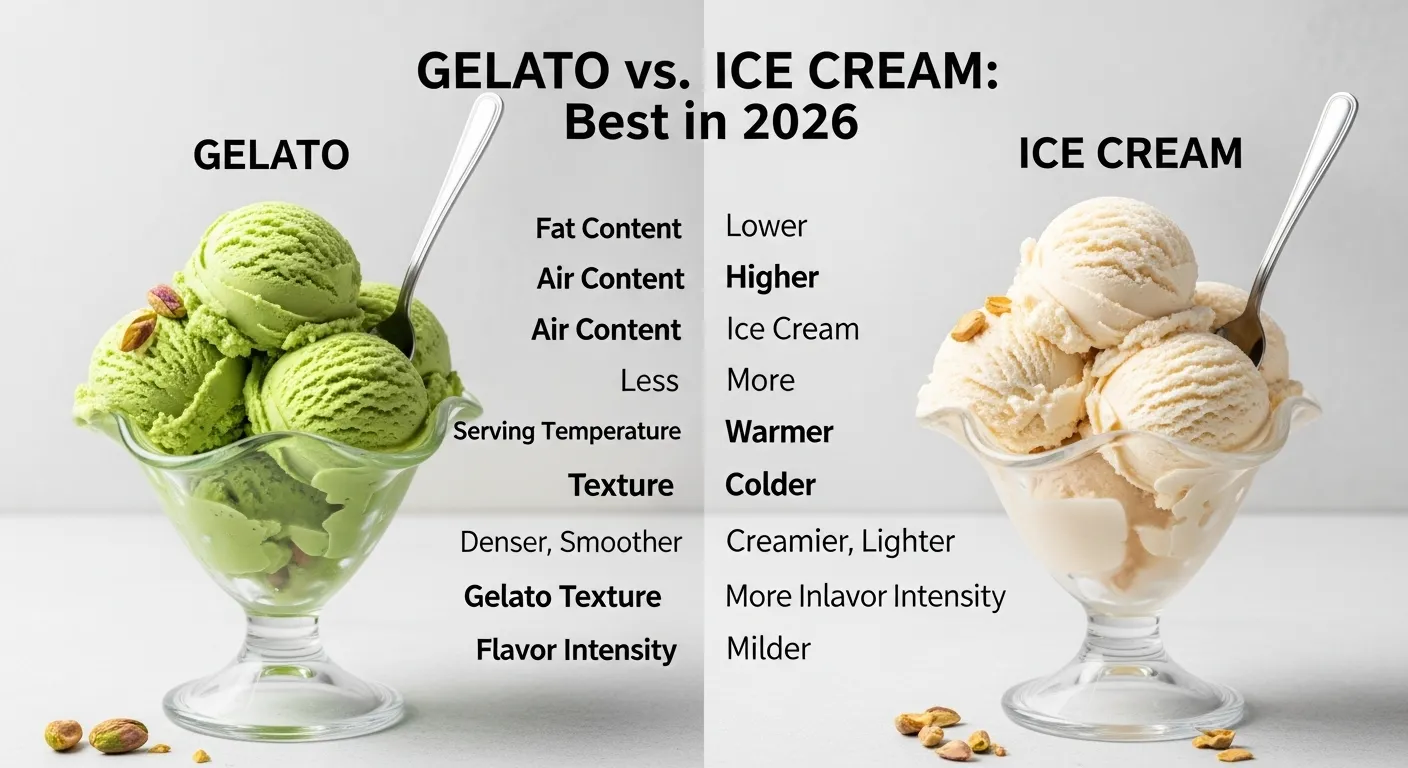
Gelato is an Italian frozen dessert with less fat and less air.
Ice cream is a frozen dessert with more cream, more fat, and more air.
Why Is Their Difference Necessary to Know for Learners and Experts?
Knowing this difference helps chefs, food lovers, and students of cooking. Restaurants and dessert shops also need to label their products correctly. Understanding the difference improves knowledge of food culture and nutrition. It also helps people choose desserts based on taste, texture, and diet. Food knowledge connects culture, health, and enjoyment in society.
Difference Between the Keywords
1. Origin
Gelato: Comes from Italy.
- Popular in Italian dessert shops.
- Traditional Italian recipe.
Ice Cream: Popular in many countries.
- Common in the United States.
- Sold worldwide.
2. Fat Content
Gelato: Lower fat.
- Uses more milk.
- Uses less cream.
Ice Cream: Higher fat.
- Uses heavy cream.
- Uses more egg yolk in some recipes.
3. Air Content
Gelato: Less air whipped in.
- Dense texture.
- Smooth and rich feel.
Ice Cream: More air whipped in.
- Lighter texture.
- Fluffy feel.
4. Serving Temperature
Gelato: Served slightly warmer.
- Softer texture.
- Strong flavor.
Ice Cream: Served colder.
- Harder texture.
- Slower melting.
5. Texture
Gelato: Thick and silky.
- Feels creamy on tongue.
- Very smooth.
Ice Cream: Light and airy.
- Fluffy feel.
- Less dense.
6. Flavor Strength
Gelato: Strong flavor.
- Rich chocolate taste.
- Clear fruit taste.
Ice Cream: Milder flavor.
- Sweet vanilla taste.
- Creamy chocolate taste.
7. Ingredients
Gelato: Milk, sugar, flavor.
- Often fewer eggs.
- Focus on natural flavors.
Ice Cream: Cream, sugar, eggs.
- More dairy fat.
- Many flavor mixes.
8. Production Style
Gelato: Slow churning.
- Less air inside.
- Dense product.
Ice Cream: Faster churning.
- More air inside.
- Larger volume.
9. Storage
Gelato: Stored at warmer temperature.
- Softer in display.
- Easy to scoop.
Ice Cream: Stored very cold.
- Hard in freezer.
- Needs strong scoop.
10. Popular Places
Gelato: Sold in Italian gelaterias.
- Shops in Rome.
- Shops in Florence.
Ice Cream: Sold worldwide.
- Grocery stores.
- Ice cream trucks.
Nature and Behaviour of the Both
Gelato:
Dense, creamy, and rich in flavor. It melts faster and feels smooth in the mouth.
Ice Cream:
Light, airy, and colder. It stays firm longer and has a fluffy texture.
Why Are People Confused About Their Use?
Both desserts look similar. Both are frozen and sweet. Shops sometimes use the names loosely for marketing. Because of this, people think gelato is just a fancy name for ice cream.
Table Showing Difference and Similarity
| Point | Gelato | Ice Cream | Similarity |
| Origin | Italy | Global | Frozen dessert |
| Fat | Lower | Higher | Dairy product |
| Air | Less | More | Sweet treat |
| Texture | Dense | Light | Cold dessert |
| Flavor | Strong | Mild | Many flavors |
Which Is Better in What Situation?
Gelato is better when someone wants strong flavor and smooth texture. It is ideal for dessert lovers who enjoy rich taste in a small portion. Many tourists try gelato when visiting Italy because of its authentic flavor and creamy feel.
Ice cream is better for large servings and many toppings. It is popular for sundaes, cones, and milkshakes. Its lighter texture and colder temperature make it a classic treat in many countries.
How Are the Keywords Used in Metaphors and Similes?
- “Her voice was as smooth as gelato.”
- “The clouds looked like scoops of ice cream.”
Connotative Meaning
Gelato:
- Positive and luxurious feeling.
- Example: The café served rich gelato.
Ice Cream:
- Fun and cheerful feeling.
- Example: Children enjoyed ice cream in the park.
Idioms
- “The icing on the cake.”
- Example: The gelato was the icing on the cake of our trip.
Works in Literature
Food references appear in many modern works:
- Eat Pray Love (Memoir, Elizabeth Gilbert, 2006) – famous for gelato scenes in Italy.
Movies
- Eat Pray Love (2010, USA) – shows Italian gelato culture.
- Ice Princess (2005, USA) – includes ice cream shop scenes.
Five Frequently Asked Questions
1. Is gelato the same as ice cream?
No, they differ in fat, air, and texture.
2. Which has more fat?
Ice cream usually has more fat.
3. Which tastes stronger?
Gelato often has stronger flavor.
4. Which melts faster?
Gelato melts faster.
5. Which is more common worldwide?
Ice cream is more common.
How Are Both Useful for Surroundings?
Both desserts support food culture and tourism. Gelato shops attract visitors in Italy. Ice cream businesses create jobs worldwide. They also bring joy to social gatherings and celebrations.
Final Words for the Both
Gelato is dense and flavorful.
Ice cream is light and creamy.
Conclusion
The difference between gelato and ice cream lies in ingredients, texture, and preparation. Gelato uses more milk and less air, giving it a dense and strong flavor. Ice cream uses more cream and more air, creating a lighter texture. Both desserts are delicious and loved around the world. Understanding the difference helps us appreciate food traditions and choose the treat that suits our taste.

I’m Zahid Abbas, an educator, researcher, and digital publishing strategist with a passion for linguistics, grammar, and clear communication. As a content creator and SEO specialist, I craft research-driven, reader-focused content that empowers learners and makes knowledge accessible worldwide.