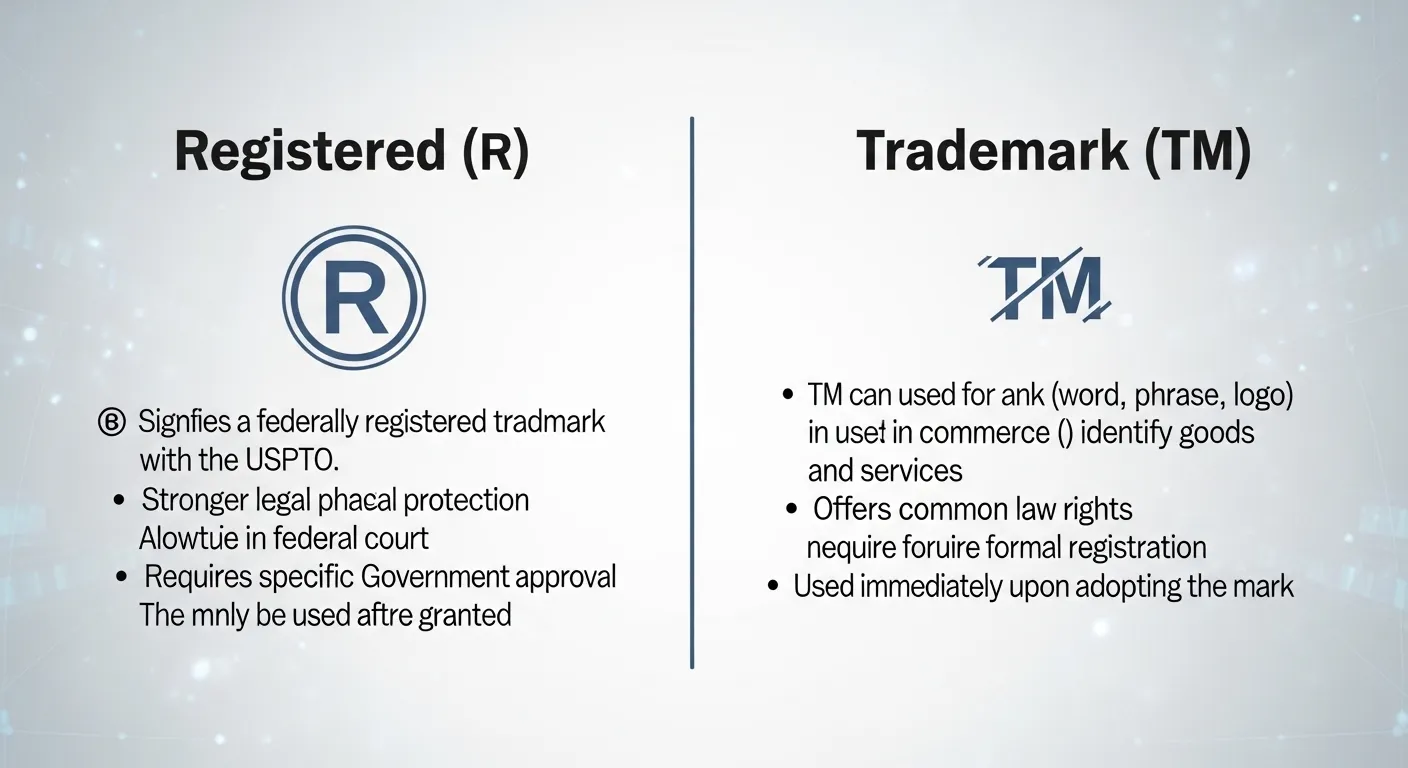
A small business owner creates a new logo for her company. She puts the symbol “™” next to the brand name. Later, after legal approval, she starts using the symbol “®”. Many people wonder what these signs mean.
This is where the difference between registered and trademark for 2026 becomes important. The difference between registered and trademark relates to legal protection and official approval.
Businesses, writers, and entrepreneurs often talk about the difference between registered and trademark when protecting their brand names.
If we understand the difference between registered and trademark, we can see how companies protect their identity and products in the market.
Pronunciation
- Registered
- US: /ˈrɛdʒɪstərd/
- UK: /ˈrɛdʒɪstəd/
- Trademark
- US: /ˈtreɪdmɑːrk/
- UK: /ˈtreɪdmɑːk/
Now let us understand the main idea behind these terms.
Key Difference Between the Both
A trademark is a symbol, word, or logo used to identify a brand or product.
A registered trademark is a trademark that has been officially approved and recorded by a government authority.
Why Is Their Difference Necessary to Know for Learners and Experts?
Understanding these terms is important for business owners, lawyers, and students of marketing. Companies use trademarks to protect their brand identity. When the trademark becomes registered, it receives stronger legal protection. Knowing the difference helps businesses avoid copying and legal disputes. It also helps consumers recognize genuine products and trusted brands in the marketplace.
Difference Between the Keywords
1. Meaning
Trademark:
A brand sign used by a company.
- A company logo.
- A brand name on products.
Registered Trademark:
A trademark officially recorded by the government.
- Approved brand logo.
- Legally protected brand name.
2. Symbol Used
Trademark: Uses ™ symbol.
- Used before registration.
- Shows claim of ownership.
Registered Trademark: Uses ® symbol.
- Used after approval.
- Shows official protection.
3. Legal Status
Trademark: Limited legal protection.
- Based on use.
- May not be officially recorded.
Registered Trademark: Strong legal protection.
- Protected by law.
- Recorded in official database.
4. Registration Process
Trademark: No formal approval required.
- Business starts using it.
- Informal protection.
Registered Trademark: Requires government approval.
- Application process.
- Legal review.
5. Ownership Proof
Trademark: Harder to prove ownership.
- Must show business use.
- Legal proof may be complex.
Registered Trademark: Easy to prove ownership.
- Official certificate.
- Government record.
6. Legal Rights
Trademark: Basic rights.
- Can warn others.
- May claim unfair use.
Registered Trademark: Strong rights.
- Can sue for infringement.
- Can stop copycats legally.
7. Geographic Protection
Trademark: Protection often limited to local use.
- Local market recognition.
- Limited enforcement.
Registered Trademark: Protected nationally.
- Nationwide legal coverage.
- Wider enforcement.
8. Brand Value
Trademark: Early stage brand identity.
- Startup brand name.
- New company logo.
Registered Trademark: Established brand identity.
- Trusted brand image.
- Official recognition.
9. Cost
Trademark: Usually free to use.
- No registration fee.
- Simple usage.
Registered Trademark: Requires registration fees.
- Legal process.
- Official filing costs.
10. Example Brands
Famous companies such as Apple and Nike have registered trademarks for their logos and brand names.
Nature and Behaviour of the Both
Trademark:
A simple brand identifier. Businesses use it to show ownership of a name, logo, or slogan.
Registered Trademark:
A legally protected brand mark. It gives stronger rights and official recognition.
Why Are People Confused About Their Use?
Many people think the words mean the same thing. In everyday speech, “trademark” is used for both registered and unregistered marks. The confusion happens because both protect brand identity, but only one has official government registration.
Table Showing Difference and Similarity
| Point | Trademark | Registered Trademark | Similarity |
| Symbol | ™ | ® | Brand identifier |
| Legal Status | Informal protection | Official protection | Protects brand |
| Registration | Not required | Required | Used in business |
| Cost | Free to use | Requires fees | Identifies products |
| Protection | Limited | Strong | Prevents copying |
Which Is Better in What Situation?
A trademark is useful when a business is new. It helps a company show that a name or logo belongs to them. Startups often use the ™ symbol while building their brand identity.
A registered trademark is better for established businesses. It provides strong legal protection and allows companies to take legal action against copycats. Large companies rely on registered trademarks to protect their reputation and brand value.
How Are the Keywords Used in Metaphors and Similes?
Sometimes people use the word “trademark” as a metaphor:
- “That smile is her trademark.”
- “His honesty is his trademark quality.”
Here, “trademark” means a unique or recognizable trait.
Connotative Meaning
Trademark:
- Positive meaning of uniqueness.
- Example: Creativity is his trademark style.
Registered Trademark:
- Professional and official meaning.
- Example: The company owns a registered trademark for its logo.
Idioms or Proverbs
While there are no common idioms for “registered trademark,” the word trademark itself appears in expressions:
- “That laugh is his trademark.”
- Example: Her kindness became her trademark.
Works in Literature
These terms appear mainly in legal and business books:
- Trademark Law and Theory (Legal book, Graeme B. Dinwoodie, 2008)
- Intellectual Property Law (Academic book, Lionel Bently, 2018)
Movies Related to Business and Branding
- The Founder (2016, USA) – story about the McDonald’s brand.
- Joy (2015, USA) – about invention and product branding.
Five Frequently Asked Questions
1. What does ™ mean?
It means the mark is claimed as a trademark.
2. What does ® mean?
It means the trademark is officially registered.
3. Can anyone use ™?
Yes, if they claim the mark for their brand.
4. Is registration required for trademarks?
No, but registration provides stronger protection.
5. Why do companies register trademarks?
To protect their brand legally.
How Are Both Useful for Surroundings?
Both help businesses protect creativity and innovation. They prevent copying and support fair competition in the market. They also help customers recognize authentic products and trusted brands.
Final Words for the Both
A trademark identifies a brand.
A registered trademark gives official legal protection.
Conclusion
The difference between registered and trademark mainly lies in legal status and protection. A trademark is a brand name, logo, or symbol used to identify products or services. A registered trademark is officially approved by a government authority and has stronger legal protection. Both are important for brand identity and business growth. Understanding this difference helps businesses protect their ideas and helps consumers recognize genuine products in the market.

I’m Zahid Abbas, an educator, researcher, and digital publishing strategist with a passion for linguistics, grammar, and clear communication. As a content creator and SEO specialist, I craft research-driven, reader-focused content that empowers learners and makes knowledge accessible worldwide.