A company plans to launch a new product. The manager says, “There is a risk that the shipment may be late.” A week later, the truck breaks down and the shipment is delayed.
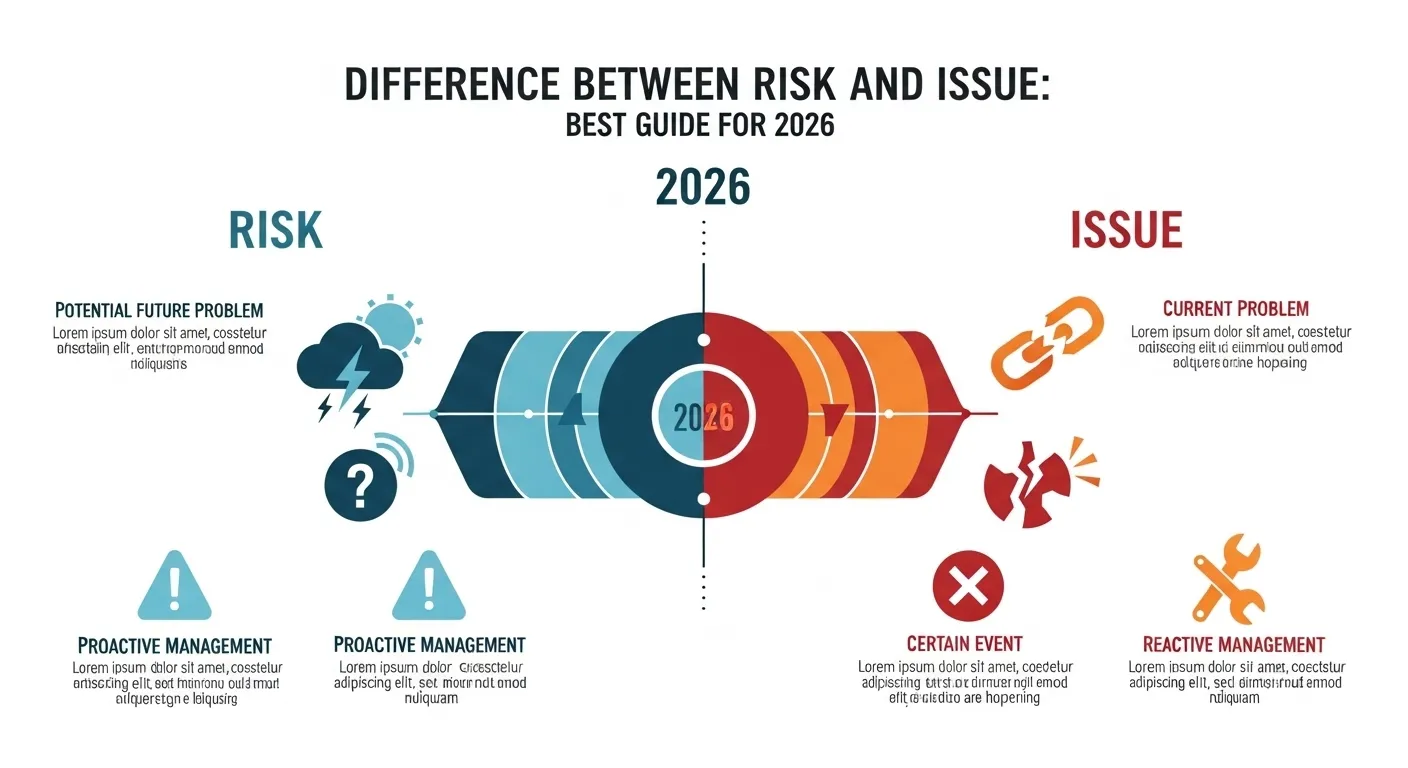
Now it is an issue. This story shows the difference between risk and issue. The difference between risk and issue is about time and certainty. A risk may happen in the future. An issue is already happening now.
Many people mix up these terms in business and daily life. But understanding the difference between risk and issue helps teams plan better and solve problems faster.
Pronunciation
- Risk
- US: /rɪsk/
- UK: /rɪsk/
- Issue
- US: /ˈɪʃuː/
- UK: /ˈɪsjuː/
Now let us understand the main idea.
Key Difference Between the Both
A risk is a possible problem that may happen in the future.
An issue is a problem that is already happening.
Why Is Their Difference Necessary to Know for Learners and Experts?
This difference is important in business, project management, and daily planning. Managers study risks to prevent problems. They solve issues to fix current trouble. Clear understanding helps teams save time, money, and effort. It also improves decision-making in companies and organizations.
Difference Between the Keywords
1. Time
Risk:
Future event.
- Rain may delay an event.
- Machine may stop working.
Issue:
Present problem.
- Event is delayed by rain.
- Machine has stopped working.
2. Certainty
Risk:
Uncertain.
- May happen.
- Not sure.
Issue:
Certain.
- Has happened.
- Confirmed problem.
3. Planning
Risk:
Needs prevention plan.
- Backup supplier ready.
- Insurance purchased.
Issue:
Needs solution.
- Fix broken machine.
- Call repair team.
4. Management Style
Risk:
Managed before it happens.
- Risk assessment meeting.
- Safety checks.
Issue:
Managed after it happens.
- Problem-solving session.
- Emergency response.
5. Example in Business
Risk:
Market demand may fall.
Supplier may fail.
Issue:
Sales have dropped.
Supplier has failed.
6. Cost Impact
Risk:
May cause loss.
- Possible delay costs.
- Possible repair cost.
Issue:
Already causing loss.
- Current delay fine.
- Ongoing repair expense.
7. Documentation
Risk:
Written in risk register.
- Listed in project plan.
- Reviewed regularly.
Issue:
Written in issue log.
- Recorded after problem.
- Tracked until solved.
8. Control
Risk:
Can be reduced.
- Safety training.
- Early warnings.
Issue:
Must be resolved.
- Replace broken part.
- Provide refund.
9. Emotional Impact
Risk:
Causes worry.
- Team feels alert.
- Manager stays cautious.
Issue:
Causes stress.
- Team feels pressure.
- Urgent action needed.
10. Example in Real Life
Risk:
You may catch a cold in winter.
Car may run out of fuel.
Issue:
You have caught a cold.
Car has stopped due to no fuel.
Nature and Behaviour of the Both
Risk:
It is a possibility. It belongs to the future. It can be avoided or reduced with planning.
Issue:
It is a real problem. It belongs to the present. It needs quick action and solution.
Why Are People Confused About Their Use?
Both words relate to problems. Both are used in business and daily speech. People sometimes call every problem a risk. The confusion happens because both involve negative outcomes. The key difference is time.
Table Showing Difference and Similarity
| Point | Risk | Issue | Similarity |
| Time | Future | Present | Related to problems |
| Certainty | Uncertain | Certain | Need management |
| Action | Prevention | Solution | Affect results |
| Cost | Possible cost | Actual cost | Impact business |
| Planning | Risk plan | Issue log | Used in projects |
Which Is Better in What Situation?
A risk is better to focus on during planning. When starting a project, teams should list possible risks. This helps avoid future trouble. Early action saves money and time.
An issue needs attention during execution. When a problem appears, quick action is required. Solving issues fast keeps the project on track and reduces damage.
How Are the Keywords Used in Metaphors and Similes?
- “Life is a risk.” (life has uncertainty)
- “Trust is at risk.” (trust may be lost)
- “We have an issue here.” (problem exists now)
In business books like The Lean Startup by Eric Ries (2011), risk management is often discussed.
Connotative Meaning
Risk:
- Slight negative meaning.
- Sometimes positive in growth.
- Example: Taking a risk can lead to success.
Issue:
- Negative meaning.
- Example: We have a serious issue to fix.
Idioms and Sayings
- “No risk, no reward.”
- Example: She started her business because no risk, no reward.
- “That is a big issue.”
- Example: Missing the deadline is a big issue.
Works in Literature and Business
- Against the Gods (Business history, Peter L. Bernstein, 1996) – about risk.
Movies Related to Risk and Problems
- The Big Short (2015, USA) – shows financial risk.
- Apollo 13 (1995, USA) – shows issues during space mission.
Five Frequently Asked Questions
1. Is risk the same as issue?
No. Risk may happen. Issue has happened.
2. Can a risk become an issue?
Yes. If it happens, it becomes an issue.
3. Which comes first?
Risk comes first.
4. Can we avoid risks?
We can reduce or manage them.
5. Can we ignore issues?
No. Issues must be solved.
How Are Both Useful for Surroundings?
Understanding risk helps prevent harm in business and daily life. Managing issues helps fix problems quickly. Together, they improve safety, planning, and success in society.
Final Words for the Both
Risk is a possible future problem.
Issue is a current real problem.
Conclusion
The difference between risk and issue is mainly about time and certainty. A risk is a possible event that may cause trouble in the future. An issue is a problem that is already happening and needs action. Understanding this difference helps managers, students, and individuals plan better and respond wisely. When risks are managed early and issues are solved quickly, success becomes easier to achieve.

I’m Zahid Abbas, an educator, researcher, and digital publishing strategist with a passion for linguistics, grammar, and clear communication. As a content creator and SEO specialist, I craft research-driven, reader-focused content that empowers learners and makes knowledge accessible worldwide.