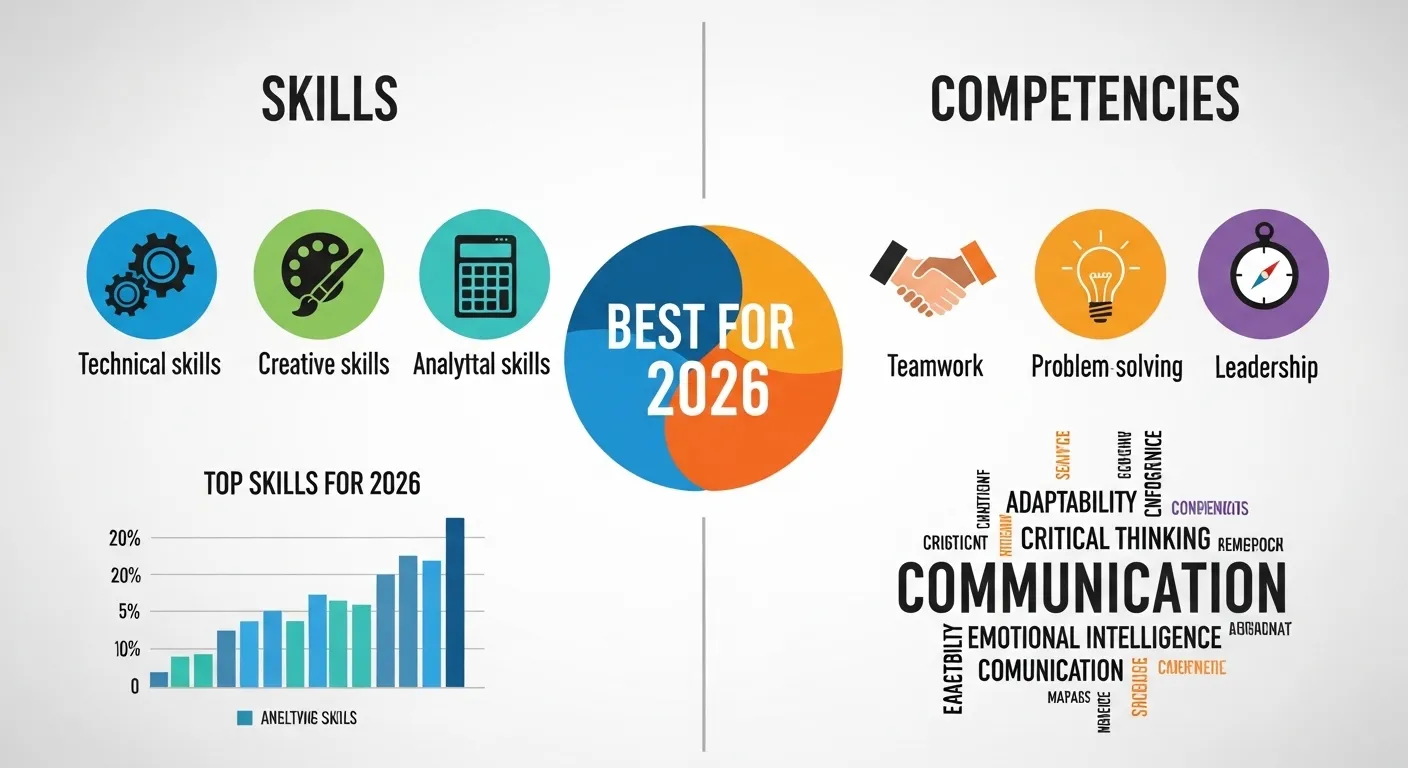
A young graduate went for a job interview. The manager asked, “What skills do you have?” Then he asked, “What competencies do you bring?” The student felt confused. He thought both words meant the same thing.
Many people face this problem. The difference between skills and competencies is important in jobs and education. In career planning, the difference between skills and competencies helps people grow faster.
In training programs, the difference between skills and competencies shapes learning goals. When companies hire workers, the difference between skills and competencies guides their choice. Both words relate to ability, but they are not equal in meaning.
Pronunciation
- Skills
- US: /skɪlz/
- UK: /skɪlz/
- Competencies
- US: /ˈkɑːmpətənsiz/
- UK: /ˈkɒmpɪtənsiz/
Now let us explore their real meaning in detail.
Key Difference Between Skills and Competencies
A skill is a learned ability to do a task.
A competency is a broader ability. It includes skills, knowledge, attitude, and behavior needed to perform well.
In short:
Skill = specific task ability.
Competency = full performance ability.
Why Is Their Difference Necessary to Know for Learners and Experts?
Students prepare for careers. Teachers design courses. HR managers hire workers. If they confuse these terms, they may set wrong goals. In society, strong workers build strong systems. Experts in education and business must use clear terms. Correct understanding improves training, hiring, and leadership.
Difference Between Skills and Competencies
1. Definition
- Skill: Ability to do a task.
- Example 1: Typing fast.
- Example 2: Speaking English.
- Competency: Ability to perform well in a role.
- Example 1: Leadership.
- Example 2: Problem-solving.
2. Scope
- Skill: Narrow and specific.
- Example 1: Coding in Python.
- Example 2: Using Excel.
- Competency: Broad and combined.
- Example 1: Project management.
- Example 2: Team coordination.
3. Components
- Skill: Focus on action.
- Example 1: Driving a car.
- Example 2: Designing a poster.
- Competency: Includes skill + knowledge + attitude.
- Example 1: Safe driving behavior.
- Example 2: Creative thinking with teamwork.
4. Measurement
- Skill: Easy to test.
- Example 1: Typing speed test.
- Example 2: Language exam.
- Competency: Harder to measure.
- Example 1: Leadership review.
- Example 2: Performance appraisal.
5. Learning Time
- Skill: Learned quickly.
- Example 1: Basic software use.
- Example 2: Cooking a recipe.
- Competency: Developed over time.
- Example 1: Managing people.
- Example 2: Strategic planning.
6. Use in Job Ads
- Skill: Listed as requirement.
- Example 1: “Skill in MS Word.”
- Example 2: “Communication skills.”
- Competency: Listed as core ability.
- Example 1: “Leadership competency.”
- Example 2: “Decision-making competency.”
7. Focus Area
- Skill: Task-focused.
- Example 1: Data entry.
- Example 2: Graphic editing.
- Competency: Role-focused.
- Example 1: Customer service excellence.
- Example 2: Crisis management.
8. Nature
- Skill: Technical or soft.
- Example 1: Programming.
- Example 2: Writing.
- Competency: Behavioral and strategic.
- Example 1: Emotional intelligence.
- Example 2: Accountability.
9. Development
- Skill: Through practice.
- Example 1: Practice typing daily.
- Example 2: Practice drawing.
- Competency: Through experience.
- Example 1: Lead team projects.
- Example 2: Handle real challenges.
10. Impact
- Skill: Helps complete tasks.
- Example 1: Fix machine.
- Example 2: Translate text.
- Competency: Helps achieve goals.
- Example 1: Grow company sales.
- Example 2: Build strong team culture.
Nature and Behaviour of Both
Skills are practical and direct. They focus on doing.
Competencies are deeper and wider. They shape how a person thinks and behaves in a job role.
Why Are People Confused About Their Use?
Both words relate to ability. Many job ads mix them. In daily speech, people use them as synonyms. This creates confusion.
Table Showing Difference and Similarity
| Feature | Skills | Competencies | Similarity |
| Meaning | Specific task ability | Broad performance ability | Show capability |
| Scope | Narrow | Wide | Needed for jobs |
| Measurement | Easy | Complex | Can be developed |
| Focus | Task | Role | Improve success |
| Development | Practice | Experience | Require learning |
Which Is Better in What Situation?
Skills are better when learning a new task. For example, a student learning coding needs technical skills first. Skills help start a career. They are important for entry-level jobs.
Competencies are better for long-term growth. Managers need leadership competency. Professionals need strategic thinking. Competencies help in senior roles. They support career progress and success.
How Are the Keywords Used in Metaphors and Similes?
- “Skills are tools in a toolbox.”
- “Competencies are the engine of success.”
Skills show tools.
Competencies show power and direction.
Connotative Meaning
- Skills: Positive and practical.
- Example: “She has strong writing skills.”
- Neutral: “He learned new skills.”
- Competencies: Strong and professional.
- Example: “He showed leadership competency.”
- Neutral: “The role needs core competencies.”
Both words have positive meaning in career context.
Idioms or Related Phrases
- “Jack of all trades.”
- Example: “He has many skills, a jack of all trades.”
- “Practice makes perfect.”
- Example: “Practice makes perfect in building skills.”
Five Frequently Asked Questions
1. Is a skill the same as a competency?
No. A competency includes skills and more.
2. Can skills become competencies?
Yes. When combined with knowledge and attitude.
3. Which is more important?
Both are important.
4. Are competencies harder to build?
Yes. They need time and experience.
5. Do employers look for both?
Yes. Employers value both.
How Are Both Useful for Surroundings?
Skills improve daily work. Competencies improve leadership and teamwork. Together they build strong organizations. They support economic growth and social progress.
Final Words for Both
Skills help you do.
Competencies help you succeed.
Conclusion
The difference between skills and competencies becomes clear when we see scope and depth. Skills are specific abilities to perform tasks. Competencies are broader abilities that include skills, knowledge, and attitude. Both are important for career growth. Clear understanding helps students learn better and employers hire wisely. In modern society, strong skills and strong competencies build strong professionals.

I’m Zahid Abbas, an educator, researcher, and digital publishing strategist with a passion for linguistics, grammar, and clear communication. As a content creator and SEO specialist, I craft research-driven, reader-focused content that empowers learners and makes knowledge accessible worldwide.