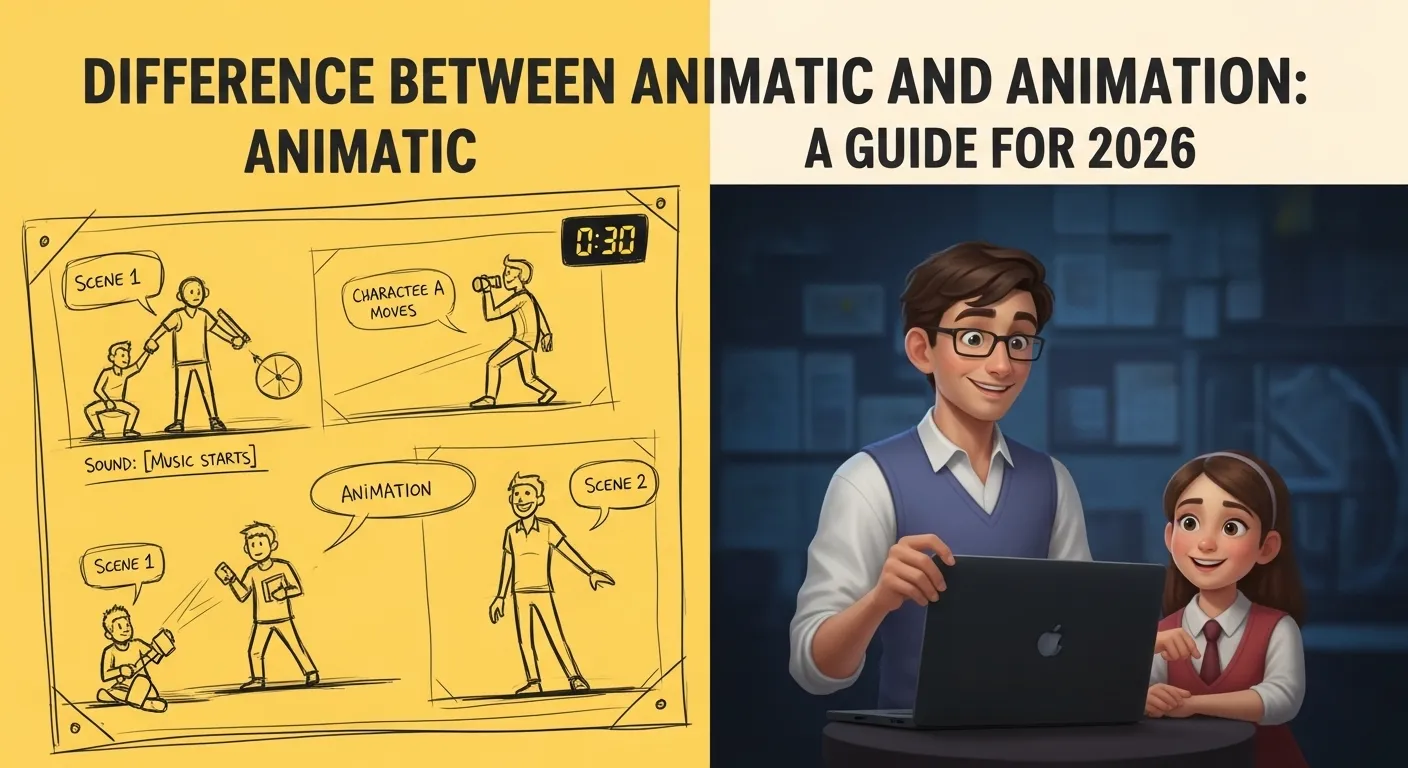
Imagine a small film team planning a cartoon. First, they draw rough pictures to show the story. These pictures move slowly with simple sound. This early version helps the team see how the story will look.
This stage is called an animatic. Later, artists create smooth motion, colors, effects, and detailed characters. This final moving artwork is called animation.
Many people ask about the difference between animatic and animation because both show moving images. However, they serve different purposes. The difference between animatic and animation is mainly about stage, detail, and purpose.
An animatic is an early planning tool, while animation is the finished visual product. Knowing the difference between animatic and animation helps students, designers, filmmakers, and artists understand how visual stories are created. In the media industry, the difference between animatic and animation is an important part of the production process.
Key Difference Between the Two
- Animatic: A rough moving storyboard used for planning a scene or film.
- Animation: A complete moving visual with detailed motion, color, and effects.
Why Their Difference Is Important for Learners and Experts in Society
Understanding the difference between animatic and animation helps people in media, design, and film production. Students learning film or digital art must know how stories are built step by step. Animatics help teams plan timing and scenes before spending time and money on final animation.
Experts in filmmaking, advertising, and game design also use animatics to test ideas quickly. This process saves time, reduces mistakes, and improves storytelling. When teams understand the difference, they can work more efficiently and produce better visual content.
Pronunciation
Animatic
- US: /ˌænəˈmætɪk/
- UK: /ˌænɪˈmætɪk/
Animation
- US: /ˌænəˈmeɪʃən/
- UK: /ˌænɪˈmeɪʃən/
A Short Bridge to the Main Topic
Now that we know the basic meanings, let us explore the difference between animatic and animation in detail with clear points and examples.
Difference Between Animatic and Animation
1. Stage of Production
Animatic: Early stage of production.
Examples:
- The director uses an animatic to test scene timing.
- The team watches the animatic before starting full animation.
Animation: Final stage of production.
Examples:
- The studio releases the finished animated film.
- The completed animation appears in theaters.
2. Level of Detail
Animatic: Very simple drawings.
Examples:
- Characters appear as rough sketches.
- Backgrounds are plain or incomplete.
Animation: Highly detailed visuals.
Examples:
- Characters move smoothly with expressions.
- Backgrounds include color and lighting.
3. Purpose
Animatic: Planning and testing.
Examples:
- Directors check scene order.
- Editors test timing with sound.
Animation: Final storytelling.
Examples:
- Viewers watch the finished film.
- Audiences enjoy the full visual story.
4. Motion Quality
Animatic: Limited or simple movement.
Examples:
- Images move slowly across the screen.
- Some scenes may only show still pictures.
Animation: Smooth and realistic movement.
Examples:
- Characters walk, run, and jump.
- Objects move naturally.
5. Sound Use
Animatic: Temporary sound or voice.
Examples:
- Rough voice recordings guide dialogue.
- Simple music helps test mood.
Animation: Final sound design.
Examples:
- Professional voice acting.
- Full music and sound effects.
6. Time to Create
Animatic: Created quickly.
Examples:
- A short animatic may take a few days.
- Teams quickly test different story ideas.
Animation: Takes much longer.
Examples:
- A film may take months or years.
- Each frame requires careful work.
7. Cost
Animatic: Low cost.
Examples:
- Only simple drawings are needed.
- Few artists work on the animatic.
Animation: High cost.
Examples:
- Many artists and designers work on it.
- Studios spend large budgets.
8. Visual Quality
Animatic: Rough and simple.
Examples:
- Lines may look unfinished.
- Colors may not appear.
Animation: Polished and professional.
Examples:
- Bright colors and textures appear.
- Lighting and shadows are detailed.
9. Audience
Animatic: Mainly for creators and production teams.
Examples:
- Directors review the animatic.
- Producers check scene timing.
Animation: For public viewers.
Examples:
- People watch animated movies.
- Children enjoy animated cartoons.
10. Role in Storytelling
Animatic: Helps plan the story.
Examples:
- It shows scene order.
- It shows camera movement.
Animation: Shows the final story.
Examples:
- The audience sees the complete narrative.
- Emotions appear through character movement.
Nature and Behaviour of Both
Animatic is a planning tool. It focuses on timing, story flow, and scene order. It is simple, quick, and flexible.
Animation is the finished creative work. It focuses on visual beauty, smooth motion, and emotional storytelling.
Why People Confuse Animatic and Animation
People confuse these terms because both show moving images. To a beginner, an animatic may look like a simple animation. However, animatics are only rough previews, while animation is the final visual product.
Table: Difference and Similarity
| Aspect | Animatic | Animation | Similarity |
| Stage | Early planning | Final production | Both show visuals |
| Detail | Rough sketches | Detailed graphics | Both use drawings |
| Purpose | Test story | Present story | Both tell stories |
| Motion | Limited movement | Smooth movement | Both show motion |
| Audience | Production team | Public viewers | Both used in media |
Which Is Better in What Situation?
Animatic
Animatics are better during the planning stage. Directors use them to test timing, camera angles, and scene order. They allow creators to fix mistakes early without spending much money or time. This makes them very useful in film and advertising production.
Animation
Animation is better when the project is ready for viewers. It provides rich visuals, smooth movement, and emotional storytelling. Finished animation is used in movies, television shows, games, and advertisements.
Use of Animatic and Animation in Metaphors and Similes
Sometimes these words appear in creative comparisons.
Examples:
- “Life is like an animatic before the final animation.”
- “His plan was only an animatic, not the final animation.”
- “Ideas start as animatics before becoming full animations.”
Connotative Meaning
Animatic
- Neutral meaning
Example: - The team watched the animatic to review the scene.
Animation
- Positive meaning
Example: - The animation brought the story to life.
Works in Visual Media
Examples of famous animated works:
- Snow White and the Seven Dwarfs — animated film, 1937
- Toy Story — computer animated film, 1995
- Frozen — animated musical film, 2013
Frequently Asked Questions
1. What is an animatic?
An animatic is a moving storyboard used to plan a film or animation.
2. What is animation?
Animation is the final moving visual created from many frames.
3. Is an animatic a finished product?
No. It is only a planning step.
4. Do all animated films use animatics?
Most professional studios use them to plan scenes.
5. Why are animatics useful?
They help creators test ideas and save time.
How Animatic and Animation Help Our Surroundings
Animatics help creators plan stories clearly. This saves time and money in production. Animation brings stories, education, and entertainment to people around the world. Together, they help create films, advertisements, games, and educational content that inform and entertain society.
Final Words for Both
Animatic is the plan. Animation is the finished art.
Conclusion
The difference between animatic and animation lies mainly in their stage and purpose. Animatic is a simple moving storyboard used for planning scenes and testing ideas. Animation is the final polished visual product that audiences watch and enjoy. Both play important roles in visual storytelling. Animatics help creators organize scenes, control timing, and reduce mistakes. Animation transforms these ideas into detailed motion, color, and emotion. By understanding the difference between animatic and animation, students, artists, and filmmakers can better appreciate how animated films and media are created step by step.

I’m Zahid Abbas, an educator, researcher, and digital publishing strategist with a passion for linguistics, grammar, and clear communication. As a content creator and SEO specialist, I craft research-driven, reader-focused content that empowers learners and makes knowledge accessible worldwide.