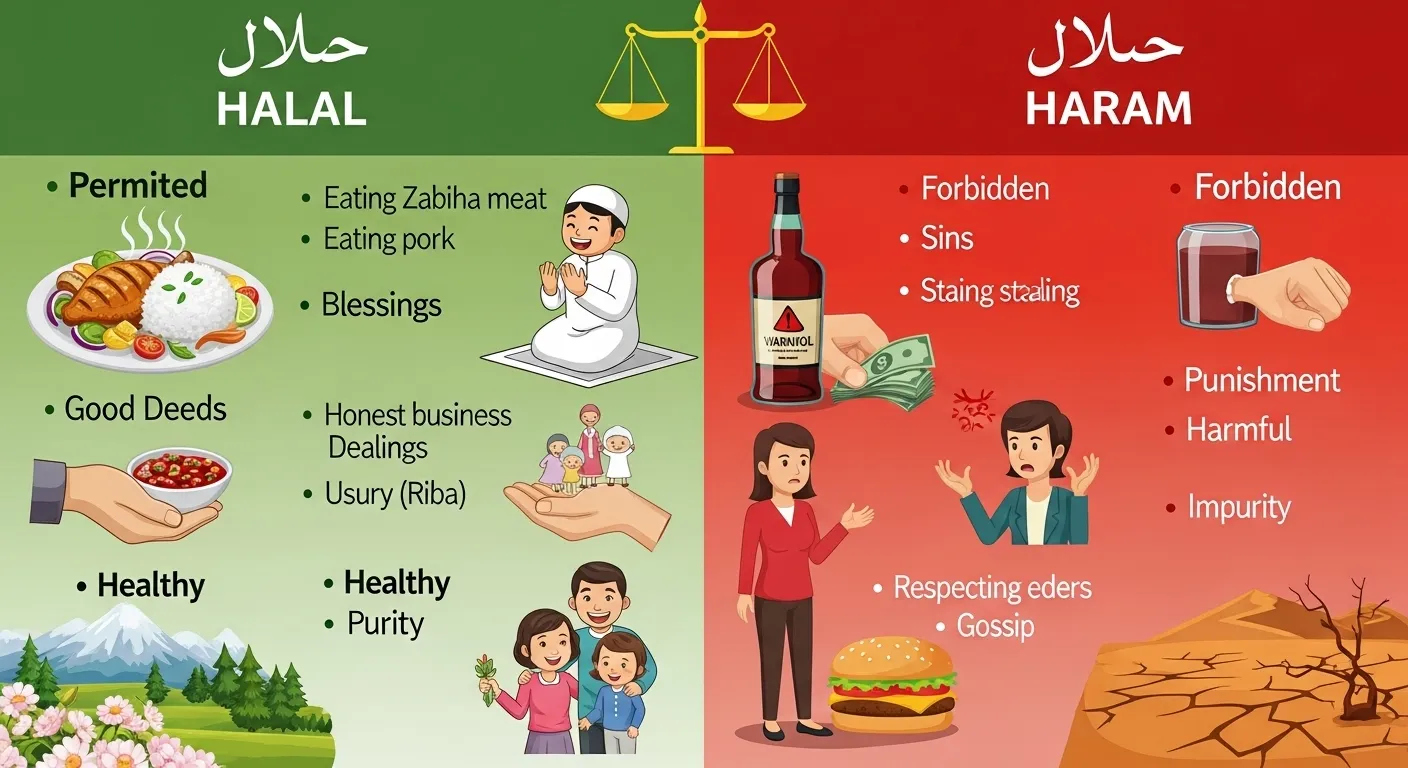
The words Halal and Haram are very important in Islamic culture and daily life. The term Halal means something that is allowed or lawful according to Islamic law. On the other hand, Haram means something that is forbidden or prohibited in Islam.
Imagine a Muslim family buying food from a market. They carefully check the label to see if the food is halal. If the food contains something not allowed in Islam, it becomes haram, and they avoid it. This simple example shows how the difference between halal and haram affects everyday life.
The difference between halal and haram is based on Islamic rules found in the Qur’an and the teachings of Muhammad. Understanding the difference between halal and haram helps Muslims make correct choices in food, behavior, and lifestyle.
Key Difference Between the Both
The main difference is their religious status.
- Halal refers to things that are permitted and lawful in Islam.
- Haram refers to things that are forbidden and sinful in Islam.
Why Their Difference Is Important for Learners and Experts
Understanding the difference between halal and haram is important for Muslims. For Muslims, these rules guide daily decisions about food, business, clothing, and behavior. Scholars, teachers, and students of religious studies also need to understand these terms clearly. Knowing this difference helps promote respect for Islamic beliefs and practices in society.
Pronunciation of Both
Halal
US: /həˈlɑːl/ UK: /həˈlɑːl/
Haram
US: /həˈrɑːm/ UK: /həˈrɑːm/
Understanding these meanings prepares us to explore the main differences between halal and haram.
Difference Between Halal and Haram
1. Basic Meaning
Halal means permitted or lawful in Islam.
Example: Eating halal meat is allowed. Example: Earning money through honest work is halal.
Haram means forbidden or unlawful in Islam.
Example: Drinking alcohol is haram. Example: Stealing money is haram.
2. Religious Status
Halal actions are approved by Islamic law.
Example: Helping others is halal. Example: Eating permitted food is halal.
Haram actions are strictly forbidden.
Example: Gambling is haram. Example: Lying for harm is haram.
3. Source of Rule
Halal rules come from Islamic teachings.
Example: Halal food rules are explained in the Qur’an. Example: Islamic scholars explain halal practices.
Haram rules also come from Islamic teachings.
Example: The Qur’an forbids alcohol. Example: Islamic law forbids injustice.
4. Effect on Believers
Halal actions bring reward and blessings.
Example: Giving charity is halal and good. Example: Honest trade is halal.
Haram actions bring sin.
Example: Cheating others is haram. Example: Taking interest in some financial forms may be haram.
5. Food Rules
Halal food is prepared according to Islamic rules.
Example: Meat from halal animals is allowed. Example: Halal slaughter follows religious guidelines.
Haram food is not allowed.
Example: Pork is haram in Islam. Example: Alcohol is haram.
6. Lifestyle
Halal lifestyle follows Islamic values.
Example: Respecting parents is halal. Example: Fair business is halal.
Haram lifestyle goes against Islamic rules.
Example: Fraud is haram. Example: Oppression is haram.
7. Business and Finance
Halal business practices are fair and honest.
Example: Selling lawful goods is halal. Example: Honest trade is halal.
Haram business practices are unethical.
Example: Selling illegal substances is haram. Example: Fraud is haram.
8. Moral Behavior
Halal behavior supports kindness and honesty.
Example: Speaking truthfully is halal.
Haram behavior harms others.
Example: Backbiting is haram. Example: Oppression is haram.
9. Spiritual Impact
Halal actions strengthen faith.
Example: Praying is halal and rewarded. Example: Charity builds faith.
Haram actions weaken faith.
Example: Dishonesty harms spiritual life. Example: Injustice damages morality.
10. Social Impact
Halal encourages a healthy society.
Example: Halal trade supports fair markets. Example: Halal ethics promote peace.
Haram harms social harmony.
Example: Crime spreads fear. Example: Dishonesty breaks trust.
Nature and Behaviour of Both
Halal represents permission, purity, and moral behavior. It encourages positive actions and lawful living according to Islamic teachings.
Haram represents prohibition and moral limits. It protects individuals and society from harmful actions and behaviors.
Why People Are Confused About Their Use
People may feel confused because:
- Some things can be uncertain (doubtful) between halal and haram.
- Cultural practices sometimes mix with religious rules.
- Different scholars may explain complex cases differently.
Which Is Better in What Situation?
Halal choices are always better because they follow Islamic teachings. When Muslims choose halal food, business, and behavior, they follow the guidance of their religion. This helps them live ethically and maintain spiritual discipline.
Haram actions should always be avoided. These actions are forbidden because they may harm individuals, society, or spiritual well-being. Avoiding haram helps maintain moral values and social harmony.
How Halal and Haram Are Used in Metaphors and Similes
Sometimes these words appear in everyday speech.
Example metaphor: “His business is completely halal, honest and clean.” Example simile: “That deal looks haram, like something dishonest.”
These expressions reflect ideas of honesty and wrongdoing.
Connotative Meaning
Halal
Positive: Purity, honesty, lawful living. Example: Many people prefer halal food for ethical reasons.
Neutral: Simply permitted by Islamic law.
Haram
Negative: Forbidden or sinful action. Example: Muslims avoid haram foods.
Neutral: Used as a legal term in religion.
Idioms or Proverbs Related
Direct idioms are rare, but ideas exist in sayings.
Example: “Honesty is the best policy.” Example: “Right is right even if no one follows it.”
Works in Literature Mentioning the Keywords
- The Study Quran — Religious Commentary — Seyyed Hossein Nasr — 2015
- Islam: The Straight Path — Religious Studies — John L. Esposito — 1998
Movies Related to Islamic Culture
- The Message — 1976 — Libya/UK
- Bilal: A New Breed of Hero — 2015 — UAE
Frequently Asked Questions
1. What is the main difference between halal and haram? Halal means permitted in Islam, while haram means forbidden.
2. Is halal only related to food? No. It also applies to behavior, business, and lifestyle.
3. Why is pork considered haram? Islamic teachings clearly forbid it.
4. Can something change from halal to haram? Yes, if it breaks Islamic rules or conditions.
5. Who decides what is halal or haram? Islamic teachings and qualified scholars explain these rules.
How Both Are Useful for Surroundings
The concepts of halal and haram guide moral behavior and social harmony. Halal promotes honesty, fairness, and cleanliness. Haram prevents harmful actions and protects society from unethical behavior.
Final Words for the Both
Halal represents permission and ethical living. Haram represents limits that protect moral values.
Together, they guide Muslim life and community values.
Conclusion
Understanding the difference between halal and haram is essential for anyone studying Islamic culture or practicing the religion. Halal refers to things that are allowed and encouraged in Islam, while haram refers to actions that are strictly forbidden.These concepts influence daily life, from food choices to business practices and moral behavior. By following halal guidelines and avoiding haram actions, believers maintain spiritual discipline and social responsibility.

I’m Zahid Abbas, an educator, researcher, and digital publishing strategist with a passion for linguistics, grammar, and clear communication. As a content creator and SEO specialist, I craft research-driven, reader-focused content that empowers learners and makes knowledge accessible worldwide.