A student at Harvard University once asked, “Is my teacher an instructor or a professor?” The class schedule used the word instructor.
The university website used the word professor. This small confusion shows the difference between instructor and professor. Many students do not know the difference between instructor and professor.
In colleges and universities, titles matter. The difference between instructor and professor is about rank, duties, and experience. Understanding the difference between instructor and professor helps students speak with respect and clarity.Both teach, but their positions are not always the same.
Pronunciation
- Instructor
- US: /ɪnˈstrʌk.tɚ/
- UK: /ɪnˈstrʌk.tə/
- Professor
- US: /prəˈfes.ɚ/
- UK: /prəˈfes.ə/
Now let us understand the main idea.
Key Difference Between the Both
An instructor is a person who teaches a course.
A professor is a senior academic title at a university.
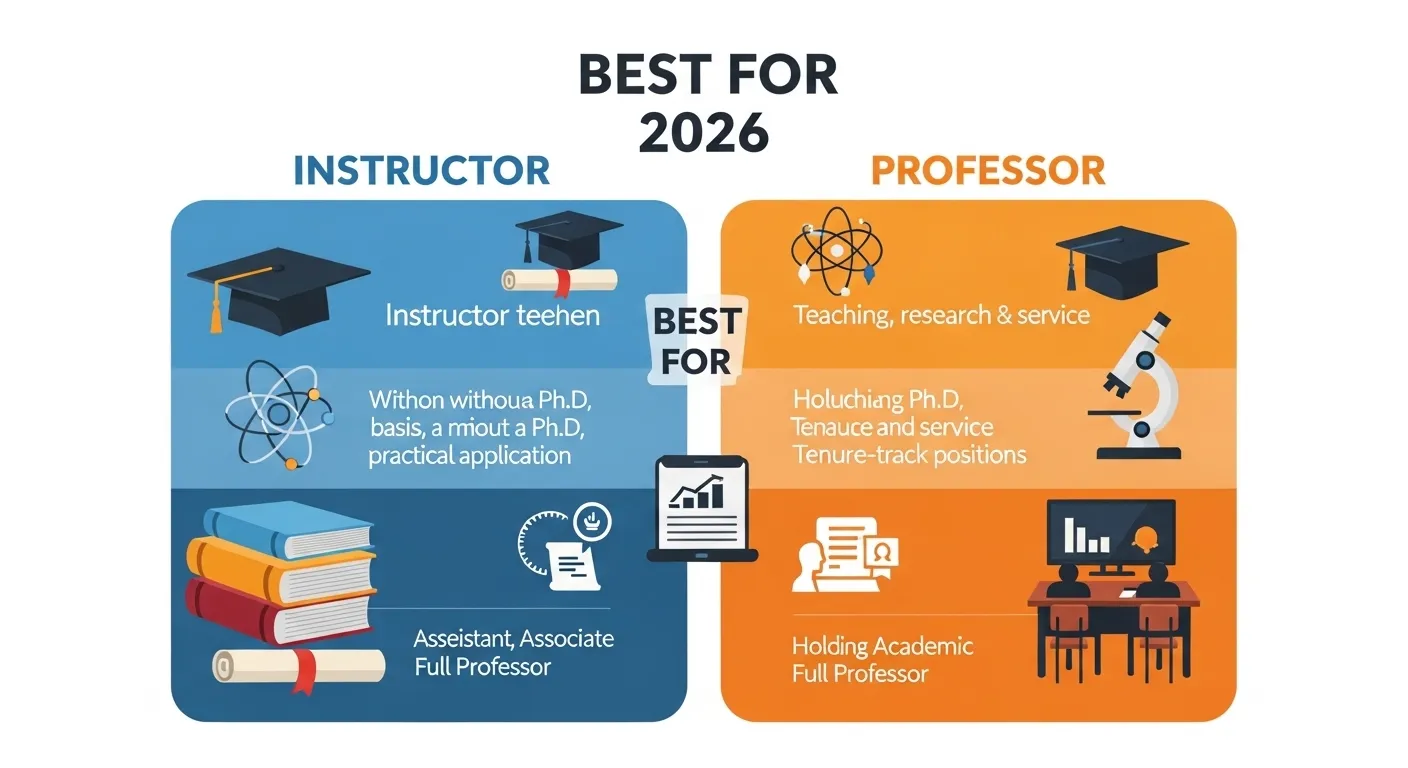
The main difference is academic rank and responsibility.
Why Is Their Difference Necessary to Know for Learners and Experts?
Students should use correct titles. Universities follow clear rank systems. Education experts study academic roles. In society, respect for teachers is important. Clear knowledge prevents misunderstanding. It also helps in career planning for those who want to work in higher education.
Difference Between Instructor and Professor
1. Academic Rank
- Instructor is often an entry-level teaching position.
- Example 1: New teacher at college.
- Example 2: Temporary teaching staff.
- Professor is a higher academic rank.
- Example 1: Senior faculty member.
- Example 2: Department head.
2. Education Level
- Instructor may have a master’s degree.
- Example 1: Master’s in English.
- Example 2: MBA holder teaching business.
- Professor usually has a PhD.
- Example 1: Doctorate in Physics.
- Example 2: Doctorate in History.
3. Job Security
- Instructor may work on contract.
- Example 1: One-year agreement.
- Example 2: Part-time teaching.
- Professor often has tenure.
- Example 1: Permanent position.
- Example 2: Long-term employment.
4. Research Role
- Instructor focuses on teaching.
- Example 1: Classroom lectures.
- Example 2: Student grading.
- Professor teaches and does research.
- Example 1: Publishing papers.
- Example 2: Leading research project.
5. Responsibilities
- Instructor handles course delivery.
- Example 1: Weekly lessons.
- Example 2: Office hours.
- Professor may guide PhD students.
- Example 1: Thesis supervision.
- Example 2: Academic advising.
6. Salary
- Instructor earns less in most cases.
- Example 1: Entry-level pay.
- Example 2: Hourly wage.
- Professor earns higher salary.
- Example 1: Senior pay scale.
- Example 2: Research grants.
7. Promotion Path
- Instructor can become assistant professor.
- Example 1: After higher study.
- Example 2: After experience.
- Professor is top rank in many systems.
- Example 1: Full professor title.
- Example 2: Academic leadership role.
8. Public Use of Title
- Instructor is not always called “Professor.”
- Example 1: “Mr. Ahmed.”
- Example 2: “Ms. Sara.”
- Professor is addressed as “Professor.”
- Example 1: “Professor Khan.”
- Example 2: “Dr. Ali.”
9. Institution Type
- Instructor works in colleges, training centers.
- Example 1: Language school.
- Example 2: Community college.
- Professor works mainly in universities.
- Example 1: Research university.
- Example 2: Graduate school.
10. Focus Area
- Instructor teaches practical skills.
- Example 1: Computer training.
- Example 2: Art workshop.
- Professor focuses on theory and research.
- Example 1: Academic lecture.
- Example 2: Scholarly seminar.
Nature and Behaviour of Both
An instructor focuses on direct teaching and classroom support.
A professor balances teaching, research, and leadership.
Both guide students and share knowledge.
Why Are People Confused About Their Use?
In some countries, all teachers are called professors. Students use the term loosely. Media also uses the word professor for any college teacher. This creates confusion.
Table Showing Difference and Similarity
| Feature | Instructor | Professor | Similarity |
| Rank | Entry-level | Senior rank | Teach students |
| Degree | Master’s common | PhD common | Academic role |
| Focus | Teaching | Teaching + Research | Classroom work |
| Job Type | Contract often | Tenured often | University setting |
| Title Use | Not always professor | Official professor | Educators |
Which Is Better in What Situation?
An instructor is better for skill-based learning. Students who want practical training benefit from focused teaching. Instructors often give more classroom time and hands-on help.
A professor is better for research study. Students planning higher education or PhD programs benefit from a professor’s research guidance. Professors also connect students to academic networks.
Both are valuable in education.
How Are the Keywords Used in Metaphors and Similes?
- “He instructed her like a calm instructor.”
- “She acted as professor of wisdom.”
Instructor suggests guidance.
Professor suggests authority and deep knowledge.
Connotative Meaning
- Instructor: Neutral and practical.
- Example: “She is a driving instructor.”
- Professor: Positive and respected.
- Example: “He is a professor of law.”
Idioms or Related Phrases
- “Teach a man to fish.”
- Example: “A good instructor teaches skills for life.”
- “Professor of life.”
- Example: “My father is a professor of life lessons.”
Five Frequently Asked Questions
1. Is every instructor a professor?
No. Professor is a higher academic rank.
2. Do professors teach classes?
Yes, they teach and do research.
3. Can an instructor become a professor?
Yes, with higher education and experience.
4. Who earns more?
Professors usually earn more.
5. Are both respected?
Yes, both play important roles.
How Are Both Useful for Surroundings?
Both educate society. They build knowledge and skills. They prepare students for careers and research. Education strengthens communities.
Final Words for Both
An instructor teaches skills.
A professor teaches and researches knowledge.
Conclusion
The difference between instructor and professor lies in rank, responsibility, and academic level. An instructor mainly teaches courses. A professor holds a senior title and often conducts research. Both are important in education. Understanding their roles helps students show respect and make informed academic choices.

I’m Zahid Abbas, an educator, researcher, and digital publishing strategist with a passion for linguistics, grammar, and clear communication. As a content creator and SEO specialist, I craft research-driven, reader-focused content that empowers learners and makes knowledge accessible worldwide.