A student wanted to share his project online. He said, “I made a website.” But he only created one page. His teacher smiled and explained the mistake. This is where the difference between webpage and website becomes important.
Many beginners mix these two words. The difference between webpage and website is simple but very useful. When you build online content, the difference between webpage and website helps you plan better.
In digital marketing, the difference between webpage and website guides design and structure. Both terms are common on the internet, but they do not mean the same thing.
Pronunciation
- Webpage
- US: /ˈweb.peɪdʒ/
- UK: /ˈweb.peɪdʒ/
- Website
- US: /ˈweb.saɪt/
- UK: /ˈweb.saɪt/
Now let us connect this idea clearly.
Key Difference Between the Both
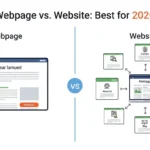
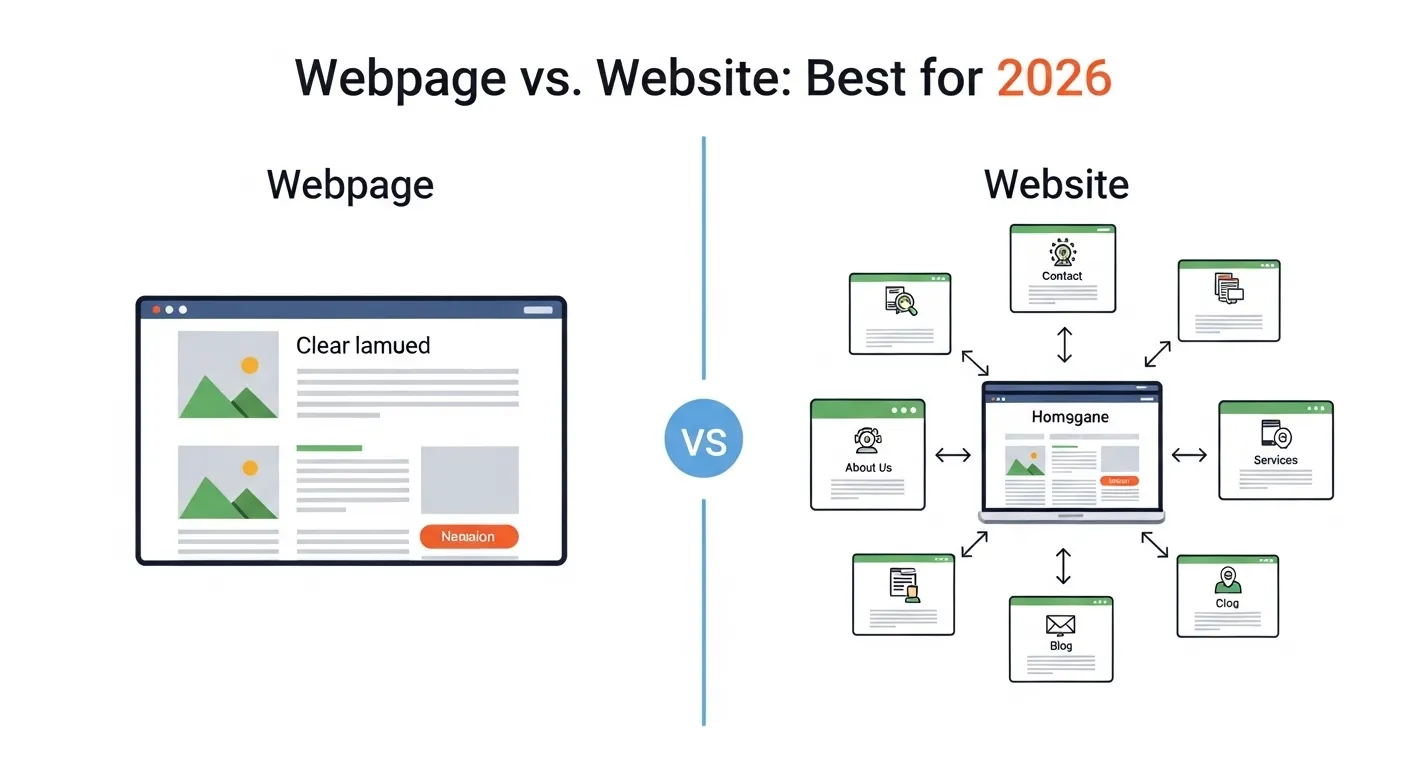
A webpage is a single page on the internet.
A website is a collection of many webpages under one domain name.
In short:
Webpage = one page.
Website = many pages together.
Why Is Their Difference Necessary to Know for Learners and Experts?
Students learning web design must know this basic idea. Business owners need it for online branding. Developers plan structure based on this difference. In society, websites support education, shopping, and communication. Clear understanding improves digital skills.
Difference Between Webpage and Website
1. Definition
- Webpage is a single document online.
- Example 1: A contact page.
- Example 2: A blog article page.
- Website is a group of webpages.
- Example 1: School website with many pages.
- Example 2: Online store with product pages.
2. Structure
- Webpage stands alone.
- Example 1: One HTML file.
- Example 2: One landing page.
- Website has many linked pages.
- Example 1: Home, About, Contact pages.
- Example 2: Blog, Shop, Services pages.
3. URL
- Webpage has a specific URL path.
- Example 1: example.com/about
- Example 2: example.com/blog/post1
- Website has main domain.
- Example 1: example.com
- Example 2: school.edu
4. Purpose
- Webpage shares specific information.
- Example 1: Product details.
- Example 2: News article.
- Website shares full information system.
- Example 1: Company profile.
- Example 2: University portal.
5. Creation
- Webpage can be created alone.
- Example 1: Simple portfolio page.
- Example 2: Event announcement page.
- Website needs planning.
- Example 1: E-commerce site.
- Example 2: News portal.
6. Navigation
- Webpage may not need menu.
- Example 1: Single landing page.
- Example 2: Online invitation page.
- Website has navigation menu.
- Example 1: Top navigation bar.
- Example 2: Footer links.
7. Hosting
- Webpage stored on server.
- Example 1: Uploaded HTML file.
- Example 2: Blog page on platform.
- Website hosted as full system.
- Example 1: WordPress site.
- Example 2: Company web server.
8. Maintenance
- Webpage simple to update.
- Example 1: Change text.
- Example 2: Update image.
- Website complex updates.
- Example 1: Update many pages.
- Example 2: Fix broken links.
9. Size
- Webpage small in size.
- Example 1: One-page resume.
- Example 2: Short article page.
- Website larger in size.
- Example 1: 100-page blog.
- Example 2: Large business portal.
10. Example in Real Life
- Webpage is like one chapter of a book.
- Example 1: Chapter 1 only.
- Example 2: Table of contents page.
- Website is like the whole book.
- Example 1: Full novel.
- Example 2: Textbook with many chapters.
Nature and Behaviour of Both
A webpage gives focused information. It works as a part.
A website works as a complete system. It connects many parts together.
Why Are People Confused About Their Use?
People use both words in daily talk. Many say “website” when they mean one page. Because both are online, confusion happens.
Table Showing Difference and Similarity
| Feature | Webpage | Website | Similarity |
| Meaning | Single page | Collection of pages | Online content |
| URL | Specific path | Main domain | Use internet |
| Size | Small | Large | Stored on server |
| Purpose | Specific info | Full system | Share information |
| Example | Contact page | Company site | Digital platform |
Which Is Better in What Situation?
A webpage is better for simple needs. If you want to share one idea, one page is enough. It is easy to build and manage. It is good for events, resumes, and announcements.
A website is better for big goals. Businesses, schools, and online stores need many pages. It supports growth. They allows updates and navigation. It builds full online presence.
How Are the Keywords Used in Metaphors and Similes?
- “His life is one webpage in a big website.”
- “Her story is a website of many webpages.”
Webpage suggests a small part.
Website suggests a complete system.
Connotative Meaning
- Webpage: Neutral.
- Example: “I created a webpage for my project.”
- Website: Positive and professional.
- Example: “The company launched a new website.”
Idioms or Related Phrases
- “Home page.”
- Example: “The home page is the main webpage.”
- “World Wide Web.”
- Example: “Websites live on the World Wide Web.”
Five Frequently Asked Questions
1. Is a webpage the same as a website?
No. A webpage is one page. A website has many pages.
2. Can a website have one webpage?
Yes, but usually it has more.
3. Do both need internet?
Yes.
4. Which is easier to create?
A webpage is easier.
5. Which is better for business?
A website is better.
How Are Both Useful for Surroundings?
Both help people share ideas. They support education and business. Both connect the world digitally.
Final Words for Both
Webpage is one digital page.
Website is many digital pages together.
Conclusion
The difference between webpage and website is simple but important. A webpage is one single online page. A website is a collection of many webpages under one domain. Understanding this helps learners, developers, and business owners. Clear knowledge builds strong digital skills. Small terms create big impact in the online world.

I’m Zahid Abbas, an educator, researcher, and digital publishing strategist with a passion for linguistics, grammar, and clear communication. As a content creator and SEO specialist, I craft research-driven, reader-focused content that empowers learners and makes knowledge accessible worldwide.