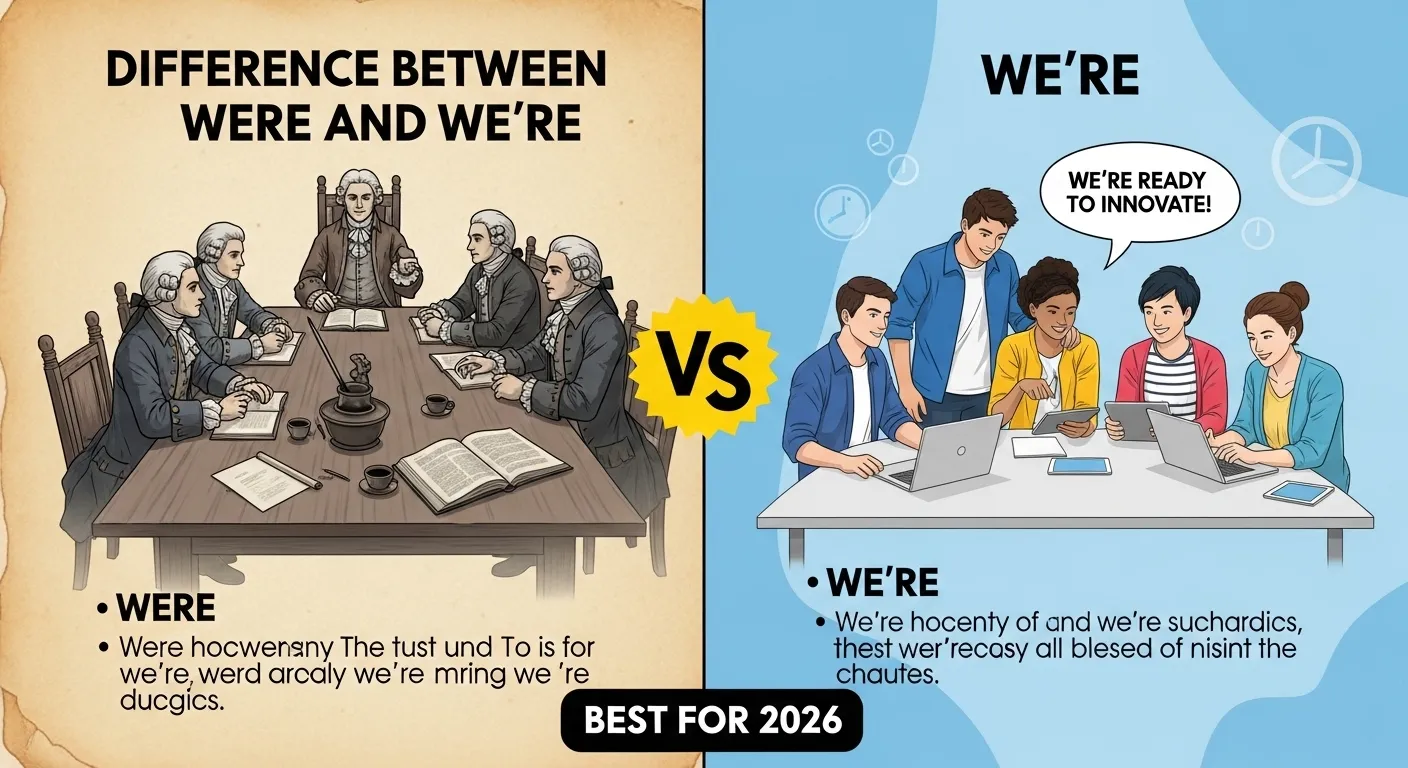
A student writes, “Were going to the market today,” and the teacher quickly marks it wrong. Why? Because the writer mixed up were and we’re. Many English learners ask about the difference between were and we’re because these two words sound alike but have different meanings and uses.
The difference between were and we’re is important in writing, speaking, exams, emails, and daily conversation. If you understand the difference between were and we’re, your grammar becomes clearer and more professional. Many mistakes happen because people hear the same sound and choose the wrong spelling.
This guide will explain the difference between were and we’re in a simple and clear way for everyone.
Pronunciation of Both
- Were
- US: /wɝː/
- UK: /wɜː/
- We’re
- US: /wɪr/ or /wɝː/
- UK: /wɪə/
They often sound similar in fast speech, which causes confusion.
Key Difference Between Both
The main difference is:
- Were is a past form of the verb be.
- We’re is a short form (contraction) of we are.
Example:
- They were happy yesterday.
- We’re happy today.
Though they sound close, their grammar jobs are different.
Why Is Their Difference Necessary to Know for Learners and Experts?
Knowing this difference helps students score better in tests. It helps workers write better emails. It helps teachers explain grammar clearly. In society, correct writing builds trust, avoids confusion, and improves communication.
Difference Between Were and We’re
1. Word Type
- Were: Verb.
Example 1: They were late.
Example 2: We were tired. - We’re: Contraction.
Example 1: We’re ready now.
Example 2: We’re going home.
2. Full Meaning
- Were: Past form of “are.”
Example 1: You were kind.
Example 2: They were here. - We’re: Means “we are.”
Example 1: We’re busy.
Example 2: We’re friends.
3. Time
- Were: Usually past time.
Example 1: We were students.
Example 2: They were young then. - We’re: Present time.
Example 1: We’re students now.
Example 2: We’re ready now.
4. Subject Used With
- Were: Used with you, we, they.
Example 1: You were early.
Example 2: They were quiet. - We’re: Used only with we.
Example 1: We’re happy.
Example 2: We’re late.
5. Apostrophe
- Were: No apostrophe.
Example 1: Were they home?
Example 2: We were there. - We’re: Has apostrophe.
Example 1: We’re here.
Example 2: We’re leaving.
6. Sentence Role
- Were: Main helping or linking verb.
Example 1: They were running.
Example 2: We were calm. - We’re: Subject + verb together.
Example 1: We’re waiting.
Example 2: We’re hungry.
7. In Questions
- Were: Starts some questions.
Example 1: Were they ready?
Example 2: Were you there? - We’re: Rarely starts a question.
Example 1: We’re ready, aren’t we?
Example 2: We’re late, right?
8. Formal Writing
- Were: Common in formal writing.
Example 1: They were informed.
Example 2: Results were clear. - We’re: Less formal than “we are.”
Example 1: We’re pleased to help.
Example 2: We’re writing today.
9. Negative Forms
- Were: Were not / weren’t.
Example 1: They weren’t here.
Example 2: We were not ready. - We’re: We are not / we aren’t.
Example 1: We aren’t late.
Example 2: We’re not angry.
10. Easy Test
- Were: Replace with “was” idea in past.
Example 1: They were tired.
Example 2: We were busy. - We’re: Replace with “we are.”
Example 1: We’re winning = We are winning.
Example 2: We’re safe = We are safe.
Nature and Behaviour of Both
- Were: Shows past state or action.
- We’re: Shows present state or action for “we.”
Why People Confuse Their Use
People confuse them because:
- They sound alike.
- Fast speech hides the apostrophe.
- Typing errors are common.
- Learners focus on sound, not grammar.
Table of Difference and Similarity
| Point | Were | We’re | Similarity |
| Meaning | Past form of be | We are | Sound similar |
| Time | Past | Present | Both common words |
| Apostrophe | No | Yes | Both use verb idea |
| Subject | You/we/they | We only | Used in sentences |
| Grammar Type | Verb | Contraction | English grammar words |
Which Is Better in What Situation?
Were is better when talking about the past. Use it for old events, past feelings, or earlier conditions. If something happened yesterday, last year, or before now, “were” may be the right choice.
We’re is better when talking about the present and the subject is “we.” Use it in speech, messages, and casual writing. In very formal writing, “we are” may be preferred.
How Are the Keywords Used in Metaphors and Similes?
These words are grammar words, so they are not common metaphor words.
- Example: “We’re one team now.” (unity idea)
- Example: “Those days were gold.” (descriptive past use)
Connotative Meaning of Both Keywords
- Were – Neutral
- We’re – Neutral
They carry grammar meaning, not emotional meaning.
Idioms or Proverbs Related to the Words
These exact words are not idioms, but appear in many sayings.
- We’re all in the same boat.
Example: We’re all in the same boat during exams. - Things were not always this way.
Example: Things were not always this way in the town.
Works in Literature with Names of Keywords
These words appear in countless books, poems, and plays because they are common grammar words.
- Were in many classic novels and poems.
- We’re in modern dialogue-heavy fiction.
Movie Names Made on Keywords
No major films are titled exactly Were or We’re as standalone grammar words.
Five Frequently Asked Questions
1. Is “we’re” the same as “we are”?
Yes.
2. Is “were” past tense?
Yes, usually.
3. Can I write “were going”?
Only if “were” is the verb: “They were going.” Not for “we are going.”
4. Why is “we’re” spelled with an apostrophe?
Because letters are removed from “we are.”
5. Which one is correct: “Were ready” or “We’re ready”?
We’re ready is correct.
How Are Both Useful for Surroundings?
They help clear communication in schools, offices, books, and online messages. Correct use prevents mistakes and improves writing quality around us.
Final Words for Both
“Were” talks about the past. “We’re” means “we are” in the present.
Conclusion
The difference between were and we’re is simple once you know grammar rules. Were is a past tense verb, while we’re is the contraction of we are. They may sound alike, but they serve different purposes. If you mean the past, use were. If you mean we are, use we’re. Learning the difference between were and we’re will improve your writing, speaking, and confidence in English.

I’m Zahid Abbas, an educator, researcher, and digital publishing strategist with a passion for linguistics, grammar, and clear communication. As a content creator and SEO specialist, I craft research-driven, reader-focused content that empowers learners and makes knowledge accessible worldwide.