A small shop owner asks a printer the cost of 500 boxes. The printer sends a price list first. Later, after printing the boxes, the printer sends a bill for payment. Many people think both papers are the same, but they are not.
Knowing the difference between quote and invoice helps buyers and sellers avoid confusion. A quote tells the expected price before work starts. An invoice asks for payment after goods or services are given. The difference between quote and invoice is important in business deals, freelancing, and daily trade.
Many new learners miss the difference between quote and invoice because both include prices. When you know the difference between quote and invoice, money matters become easier and safer.
Key Difference Between the Both
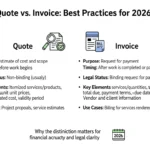
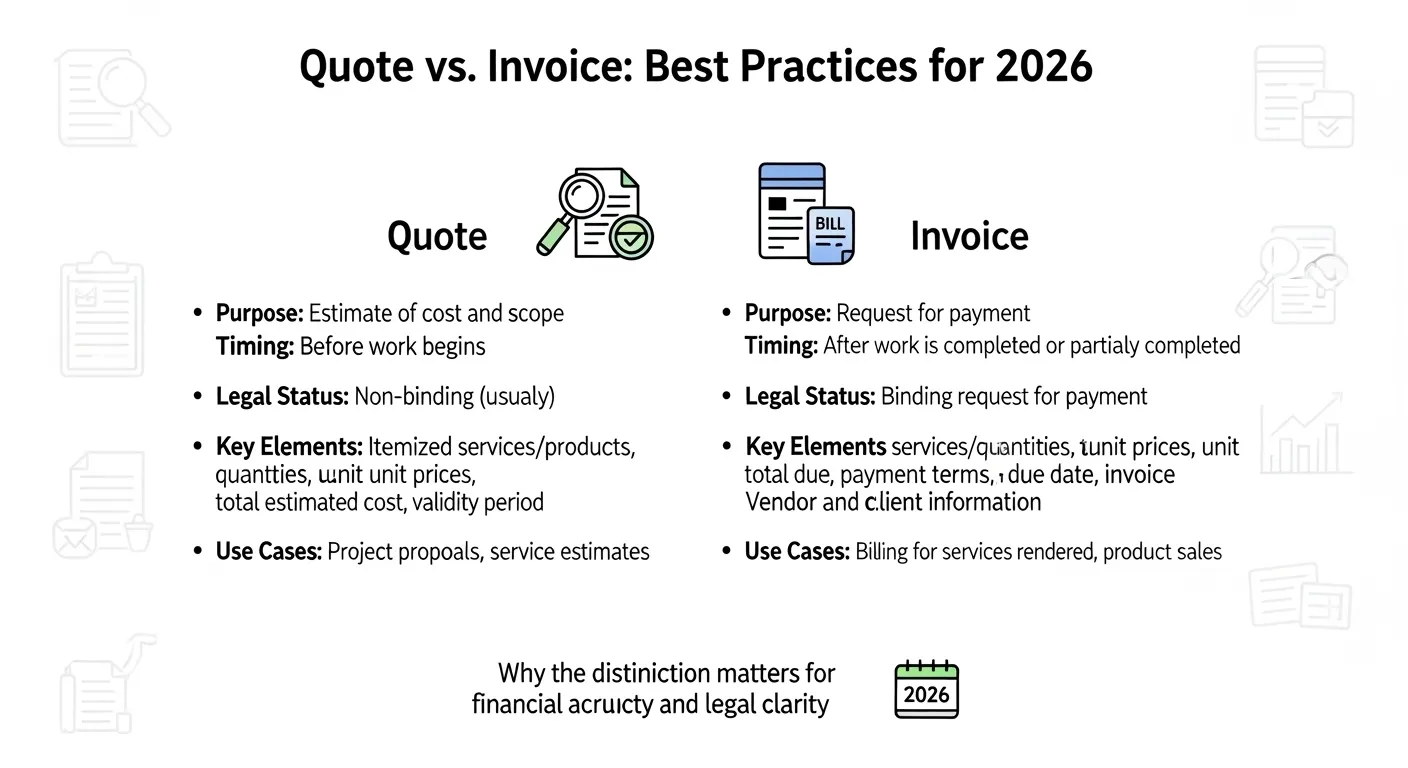
The main difference is simple. A quote is sent before the sale to show estimated cost. An invoice is sent after the sale to request payment.
Why Is Their Difference Necessary to Know for Learners and Experts?
Knowing this helps students learn business basics. It helps shop owners manage sales. It helps freelancers get paid on time. Also helps experts keep clear records, trust, and legal proof in society.
Pronunciation of Both
Quote
- US: kwoht
- UK: kwoht
Invoice
- US: IN-vois
- UK: IN-voys
Now that we know the basics, let us explore the full differences in an easy way.
Difference Between Quote and Invoice
1. Purpose
Quote: Gives estimated price before work.
Examples:
- Quote for website design
- Quote for house paint job
Invoice: Requests payment after work.
Examples:
- Invoice for finished website
- Invoice for completed painting
2. Timing
Quote: Sent before order or project.
Examples:
- Before buying furniture
- Before repair starts
Invoice: Sent after delivery or service.
Examples:
- After chair delivery
- After repair ends
3. Legal Role
Quote: Offer or estimate.
Examples:
- Price offer to client
- Service estimate paper
Invoice: Payment record.
Examples:
- Tax payment record
- Sales billing paper
4. Payment Demand
Quote: Does not ask payment now usually.
Examples:
- Client reviews cost first
- Buyer compares prices first
Invoice: Asks payment due.
Examples:
- Pay in 7 days
- Pay on receipt
5. Final Price
Quote: May change later if terms change.
Examples:
- More materials needed
- Extra work added
Invoice: Usually final amount due.
Examples:
- Final labor cost
- Final product bill
6. Content
Quote: Estimated items and prices.
Examples:
- 10 chairs estimate
- Hourly design estimate
Invoice: Final items, totals, due date.
Examples:
- Product total with tax
- Service fee with due date
7. Numbering
Quote: Often has quote number.
Examples:
- Q-101
- EST-22
Invoice: Has invoice number.
Examples:
- INV-501
- BILL-98
8. Buyer Action
Quote: Buyer accepts or rejects.
Examples:
- Accept printing cost
- Reject repair cost
Invoice: Buyer pays amount due.
Examples:
- Bank transfer payment
- Cash payment made
9. Use in Business Stage
Quote: Sales stage.
Examples:
- New customer inquiry
- Tender process
Invoice: Accounting stage.
Examples:
- Payment tracking
- Bookkeeping records
10. Common Users
Quote: Sales teams, contractors, freelancers.
Examples:
- Builder sends quote
- Designer sends quote
Invoice: Accounts teams, sellers, freelancers.
Examples:
- Shop sends invoice
- Consultant bills client
Nature and Behaviour of Both
Quote: Flexible, early-stage, persuasive, and informative. It helps start a deal.
Invoice: Formal, final, and payment-focused. It helps close a deal.
Why Are People Confused About Their Use?
People confuse them because both show prices, names, items, and totals. Both are business papers. Many new users think any price paper is a bill.
Difference and Similarity Table
| Feature | Quote | Invoice | Similarity |
| Time | Before sale | After sale | Both used in business |
| Purpose | Show cost | Ask payment | Both list prices |
| Finality | Estimate | Final bill | Both use item details |
| Action | Approve | Pay | Both keep records |
| Number | Quote no. | Invoice no. | Both may be numbered |
Which Is Better in What Situation?
Quote is better when a buyer wants to know cost before buying. It helps compare sellers, plan budget, and approve work. It is useful for custom jobs, repairs, projects, and large orders.
Invoice is better when goods are delivered or work is complete. It helps request payment, track money, and keep accounts clear. It is useful for all finished sales and services.
How Are the Keywords Used in Metaphors and Similes?
Quote
- “He used her words like a quote in a speech.”
- Means repeating words or ideas.
Invoice
- “Life sent him an invoice for past mistakes.”
- Means a cost or consequence is due.
Connotative Meaning of Both
Quote
- Positive: Clarity, planning
- Example: The quote helped us budget well.
- Neutral: Price estimate
- Example: Please send a quote.
Invoice
- Positive: Professional payment process
- Example: The invoice kept records clear.
- Negative: Expense, money owed
- Example: Another invoice arrived today.
- Neutral: Billing document
- Example: I emailed the invoice.
Idioms or Proverbs Related to the Words
No major old idioms use these exact words, but common phrases exist.
Quote Me On That
Meaning: I stand by my words.
Example: This plan will work, quote me on that.
The Invoice Is Due
Meaning: Time to pay or face result.
Example: Delay is over; the invoice is due.
Works in Literature with the Names of Keywords
- Quote Unquote – Essays/Humor, various writers, many editions
- Invoice – Used as title in business guides and modern short works
- The Quotable Series – Reference books, various editors
Movie Names Made on Keywords
- Quote Unquote – 2019, India
- The Invoice – Independent short titles, USA/UK uses vary
- Quoted – Documentary title uses exist
Five Frequently Asked Questions
1. Is a quote the same as an invoice?
No. A quote is before sale. An invoice is after sale.
2. Can a quote become an invoice?
Yes, after work is approved and completed.
3. Does an invoice mean I must pay?
Yes, if goods or services were agreed.
4. Is a quote always final?
No. It may change if terms change.
5. Which comes first?
The quote usually comes first.
How Are Both Useful for Surroundings?
Quotes help people plan costs and compare offers. Invoices help businesses receive payment and keep records. Together, they support fair trade, trust, and smooth markets.
Final Words for the Both
A quote starts the deal. An invoice finishes the deal. Both are vital tools for smart business.
Conclusion
The difference between quote and invoice is easy once you see the timing and purpose. A quote gives an expected price before work begins. An invoice asks for payment after goods or services are delivered. Both documents are useful, but they serve different stages of trade. Many people confuse them because both contain prices and item lists. Yet one helps planning, while the other helps payment. When you understand the difference between quote and invoice, you can buy, sell, and manage money with more confidence. For learners, workers, and experts, this knowledge brings order and trust to business life.

I’m Zahid Abbas, an educator, researcher, and digital publishing strategist with a passion for linguistics, grammar, and clear communication. As a content creator and SEO specialist, I craft research-driven, reader-focused content that empowers learners and makes knowledge accessible worldwide.