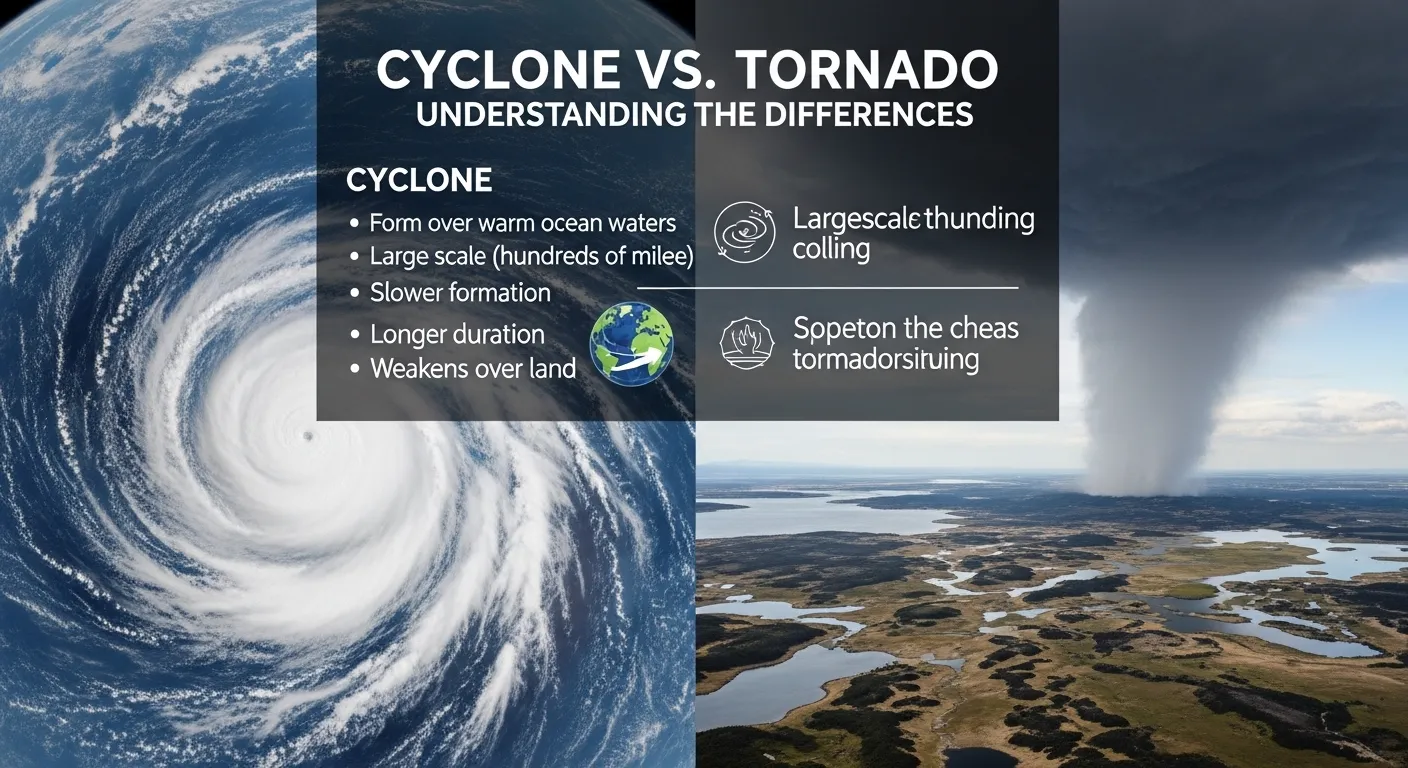
A family living near the coast in Chittagong heard news about a coming cyclone. At the same time, people in Oklahoma City were warned about a tornado.
Both storms are dangerous. Many people confuse them. The difference between cyclone and tornado is about size, place, and power. The difference between cyclone and tornado also helps people prepare for safety.
When we understand the difference between cyclone and tornado, we know how to respond. Learning the difference between cyclone and tornado can save lives and property.
Key Difference Between the Both
A cyclone is a large storm system that forms over warm ocean water.
A tornado is a small, fast-spinning column of air that forms from a thunderstorm.
The main difference is size and formation.
Pronunciation
Cyclone
- US: /ˈsaɪ.kloʊn/
- UK: /ˈsaɪ.kləʊn/
Tornado
- US: /tɔːrˈneɪ.doʊ/
- UK: /tɔːˈneɪ.dəʊ/
Now let us explore more.
Difference Between Cyclone and Tornado
1. Size
Cyclone is very large.
- Example 1: Can cover hundreds of kilometers.
- Example 2: Seen clearly on satellite images.
Tornado is small.
- Example 1: Usually a few hundred meters wide.
- Example 2: Narrow funnel shape.
2. Location
Cyclone forms over oceans.
- Example 1: Indian Ocean storms.
- Example 2: Bay of Bengal storms.
Tornado forms over land.
- Example 1: US Midwest.
- Example 2: Open plains.
3. Duration
Cyclone lasts several days.
- Example 1: Moves slowly.
- Example 2: Long warning time.
Tornado lasts minutes.
- Example 1: Short life.
- Example 2: Quick destruction.
4. Wind Speed
Cyclone has strong winds but spread out.
- Example 1: 120–250 km/h.
- Example 2: Heavy rain and storm surge.
Tornado has very high wind speed in small area.
- Example 1: Can exceed 300 km/h.
- Example 2: Uproots trees quickly.
5. Shape
Cyclone looks like a spiral cloud system.
- Example 1: Round eye at center.
- Example 2: Wide cloud bands.
Tornado looks like a funnel.
- Example 1: Thin rotating column.
- Example 2: Touches ground from cloud.
6. Other Names
Cyclone is also called hurricane or typhoon in different regions.
- Example 1: Hurricane in Atlantic.
- Example 2: Typhoon in Pacific.
Tornado is also called twister.
- Example 1: Local storm name.
- Example 2: US slang term.
7. Damage Area
Cyclone damages large coastal regions.
- Example 1: Flooding.
- Example 2: House roof damage.
Tornado damages small path.
- Example 1: One street destroyed.
- Example 2: Cars thrown away.
8. Warning Time
Cyclone gives days of warning.
- Example 1: Weather tracking.
- Example 2: Evacuation possible.
Tornado gives short warning.
- Example 1: Siren alert.
- Example 2: Few minutes to hide.
9. Rainfall
Cyclone brings heavy rain.
- Example 1: Floods.
- Example 2: Storm surge.
Tornado may or may not bring heavy rain.
- Example 1: Often part of thunderstorm.
- Example 2: Local rain area.
10. Formation Cause
Cyclone forms due to warm ocean water and low pressure.
- Example 1: Tropical climate.
- Example 2: High humidity.
Tornado forms due to severe thunderstorm and wind change.
- Example 1: Cold and warm air clash.
- Example 2: Strong wind rotation.
Nature and Behaviour of Both
Cyclone is wide and slow-moving. It brings rain, wind, and floods.
Tornado is narrow and fast-spinning. It causes sudden and intense damage.
Why Are People Confused About Their Use?
Both are storms. They have strong winds. Both cause destruction. Media reports often mix storm terms. This creates confusion.
Table Showing Difference and Similarity
| Feature | Cyclone | Tornado | Similarity |
| Size | Very large | Small | Wind storm |
| Location | Ocean | Land | Dangerous |
| Duration | Days | Minutes | Causes damage |
| Shape | Spiral system | Funnel shape | Rotating air |
| Warning | Early notice | Short notice | Weather alert |
Which Is Better in What Situation?
Neither is better. Both are natural disasters.
Cyclone preparation needs evacuation plans and coastal safety.
Tornado safety needs quick shelter and strong buildings.
Use in Metaphors and Similes
Cyclone can mean chaos.
Example: “His mind was a cyclone of thoughts.”
Tornado can mean sudden anger.
Example: “She entered like a tornado.”
Connotative Meaning
Cyclone – Strong and destructive (negative).
- Example: “The cyclone destroyed villages.”
Tornado – Sudden and violent (negative).
- Example: “The tornado ripped through town.”
Five Frequently Asked Questions
1. Is a cyclone stronger than a tornado?
Tornado winds can be stronger, but cyclones affect larger areas.
2. Do cyclones form on land?
No. They form over warm oceans.
3. Can tornadoes form over water?
Yes. Then they are called waterspouts.
4. Which lasts longer?
Cyclone lasts longer.
5. Are both dangerous?
Yes. Both can cause serious damage.
How Are Both Useful for Surroundings?
They are part of Earth’s climate system. Cyclones help move heat from oceans. Tornadoes balance air pressure differences. Nature uses them to maintain energy flow.
Final Words for Both
Cyclone is large and long-lasting.
Tornado is small and fast.
Conclusion
The difference between cyclone and tornado lies in size, formation, duration, and impact. Cyclones are large ocean storms that last days. Tornadoes are narrow, fast storms that last minutes. Both are powerful and dangerous. Knowing their difference helps people prepare and stay safe.

I’m Zahid Abbas, an educator, researcher, and digital publishing strategist with a passion for linguistics, grammar, and clear communication. As a content creator and SEO specialist, I craft research-driven, reader-focused content that empowers learners and makes knowledge accessible worldwide.