A child reading the story of The Bible saw the word “serpent.” Later, in a science class, the teacher spoke about snakes
The child asked, “Are serpent and snake the same?” Many people ask this question. The difference between serpent and snake is mostly about language and tone. The difference between serpent and snake is not about biology.
When we study the difference between serpent and snake, we see that one word is scientific and common, while the other is old and symbolic.
Understanding the difference between serpent and snake helps in reading, writing, and culture.
Key Difference Between the Both
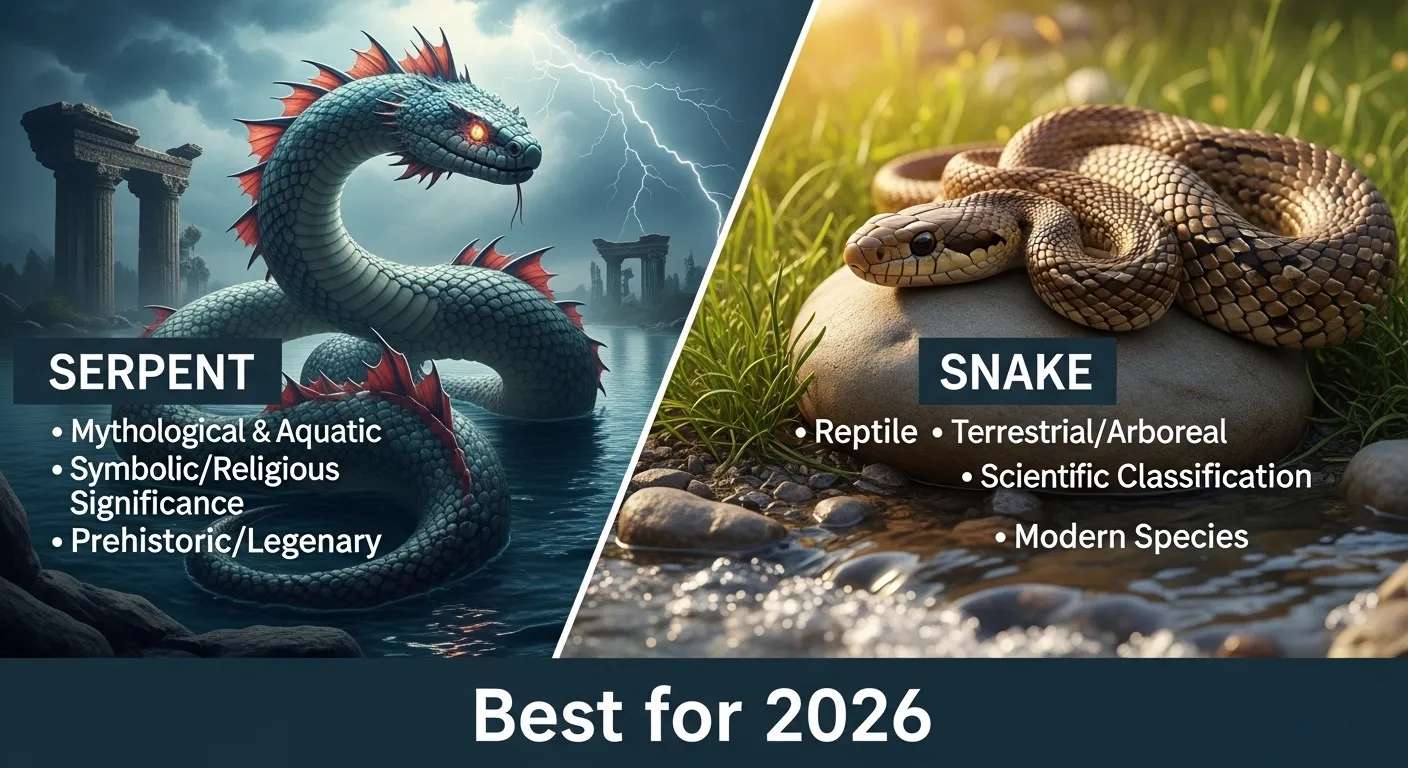
A snake is the common, scientific name for the reptile.
A serpent is an older and more symbolic word for a snake.
The main difference is usage and tone.
Pronunciation
Serpent
- US: /ˈsɝː.pənt/
- UK: /ˈsɜː.pənt/
Snake
- US: /sneɪk/
- UK: /sneɪk/
Now let us compare in detail.
Difference Between Serpent and Snake
1. Meaning
Snake means a legless reptile.
- Example 1: A cobra is a snake.
- Example 2: A python is a snake.
Serpent also means a snake, but in poetic way.
- Example 1: The serpent in a story.
- Example 2: A mythical serpent.
2. Usage
Snake is used in science and daily talk.
- Example 1: Biology book.
- Example 2: Zoo guide.
Serpent is used in religion and literature.
- Example 1: Holy texts.
- Example 2: Old poems.
3. Tone
Snake sounds neutral.
- Example 1: “I saw a snake.”
- Example 2: “Snakes live in forests.”
Serpent sounds dramatic.
- Example 1: “The dark serpent.”
- Example 2: “The evil serpent.”
4. Connotation
Snake can be neutral or negative.
- Example 1: “A garden snake.”
- Example 2: “He is a snake” (means traitor).
Serpent often sounds negative or mysterious.
- Example 1: Symbol of evil.
- Example 2: Symbol of temptation.
5. History
Snake comes from Old English word “snaca.”
- Example 1: Used for centuries.
- Example 2: Common English term.
Serpent comes from Latin “serpens.”
- Example 1: Used in ancient texts.
- Example 2: Found in classic writings.
6. Scientific Use
Snake is used in zoology.
- Example 1: Snake species study.
- Example 2: Snake habitats.
Serpent is not used in science today.
- Example 1: Not a scientific term.
- Example 2: More symbolic word.
7. Myth and Religion
Snake appears in folk tales.
- Example 1: Snake charmer stories.
- Example 2: Jungle stories.
Serpent appears in religious stories.
- Example 1: Garden of Eden.
- Example 2: Dragon-like serpent in myths.
8. Symbolism
Snake can symbolize danger or wisdom.
- Example 1: Medical symbol.
- Example 2: Warning sign.
Serpent often symbolizes evil or power.
- Example 1: Ancient symbol of chaos.
- Example 2: Mythical sea serpent.
9. Emotional Effect
Snake feels realistic.
- Example 1: Seen in nature.
- Example 2: Found in zoo.
Serpent feels mysterious.
- Example 1: Used in fantasy books.
- Example 2: Used in horror tales.
10. Modern Speech
Snake is common today.
- Example 1: News report.
- Example 2: Wildlife show.
Serpent is rare in daily talk.
- Example 1: Poem line.
- Example 2: Religious sermon.
Nature and Behaviour of Both
Both refer to the same reptile. They are cold-blooded animals. They move without legs.
The difference is not in nature, but in word style.
Why Are People Confused About Their Use?
Both words mean the same animal. Many stories use “serpent” instead of “snake.” This makes people think they are different creatures.
Table Showing Difference and Similarity
| Feature | Snake | Serpent | Similarity |
| Meaning | Reptile | Reptile (poetic) | Same animal |
| Usage | Daily, science | Literature, religion | Both English words |
| Tone | Neutral | Dramatic | Can be negative |
| Modern Use | Common | Rare | Known globally |
| Symbolism | Danger/wisdom | Evil/mystery | Cultural symbol |
Which Is Better in What Situation?
Use snake in science, school, and daily talk. It is clear and simple. It is best for real animals.
Use serpent in stories, poems, and religious writing. It adds drama and deep meaning. It sounds powerful and symbolic.
Use in Metaphors and Similes
Snake is used for betrayal.
Example: “He is a snake in the grass.”
Serpent is used for evil or temptation.
Example: “The serpent of doubt entered his mind.”
Connotative Meaning
Snake – Neutral or negative.
- Example: “A harmless snake.”
- Example: “He acted like a snake.”
Serpent – Often negative or mystical.
- Example: “The serpent tempted her.”
Five Frequently Asked Questions
1. Are serpent and snake the same?
Yes, they refer to the same animal.
2. Which word is scientific?
Snake.
3. Is serpent old-fashioned?
Yes, it sounds older and poetic.
4. Is serpent always evil?
Often in stories, yes.
5. Can I use them interchangeably?
In meaning yes, but tone is different.
How Are Both Useful for Surroundings?
Snakes control pests like rats. They help balance nature.
The word serpent helps express ideas in culture, religion, and literature.
Final Words for Both
Snake is simple and scientific.
Serpent is symbolic and poetic.
Conclusion
The difference between serpent and snake is mainly in language style. Both words describe the same reptile. Snake is modern and scientific. Serpent is old and symbolic. Knowing their difference helps in reading, writing, and understanding culture.

I’m Zahid Abbas, an educator, researcher, and digital publishing strategist with a passion for linguistics, grammar, and clear communication. As a content creator and SEO specialist, I craft research-driven, reader-focused content that empowers learners and makes knowledge accessible worldwide.