A factory worker in Karachi saw water on the floor near electric wires. The water was a hazard. It could cause harm.
Later, a short circuit caused a fire. That fire became a peril. Many people mix these words. The difference between peril and hazard is small but important. The difference between peril and hazard helps in safety, insurance, and daily life.
When you know the difference between peril and hazard, you can prevent accidents. In simple words, the difference between peril and hazard is about cause and risk. Let us understand it clearly.
Key Difference Between the Both
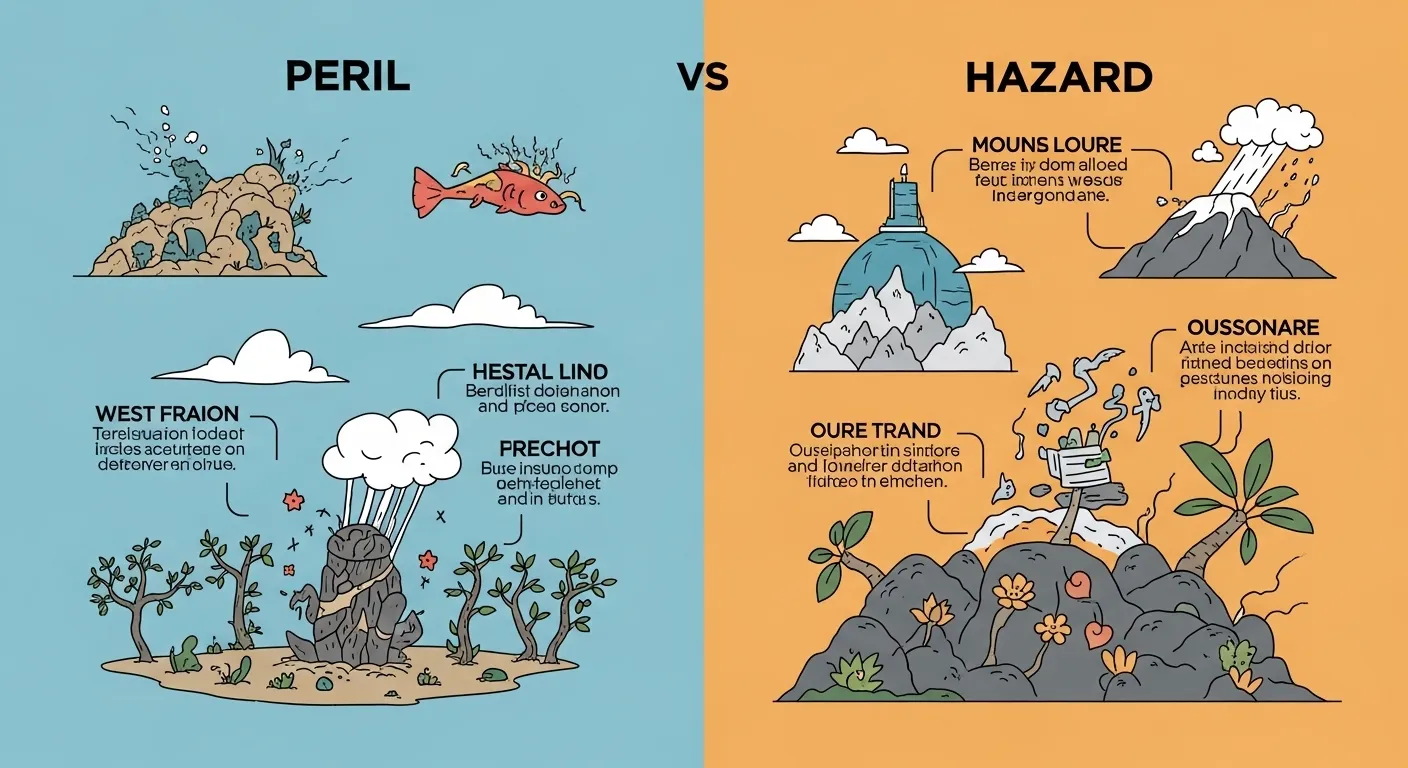
A hazard is something that can cause harm.
A peril is the actual event that causes damage.
Hazard is the danger source.
Peril is the harmful event.
Pronunciation
Peril
- US: /ˈper.əl/
- UK: /ˈper.ɪl/
Hazard
- US: /ˈhæz.ərd/
- UK: /ˈhæz.əd/
Now let us move to the full comparison.
Difference Between Peril and Hazard
1. Meaning
Hazard is a possible source of harm.
- Example 1: Wet floor.
- Example 2: Broken stair.
Peril is the actual harmful event.
- Example 1: Slip and fall.
- Example 2: Fire accident.
2. Nature
Hazard is a condition.
- Example 1: Sharp knife on table.
- Example 2: Open electric wire.
Peril is an event.
- Example 1: Knife cuts finger.
- Example 2: Electric shock.
3. Timing
Hazard exists before damage.
- Example 1: Gas leak.
- Example 2: Weak roof.
Peril happens during damage.
- Example 1: Explosion.
- Example 2: Roof collapse.
4. Role in Insurance
Hazard increases risk.
- Example 1: No fire alarm.
- Example 2: Old wiring.
Peril is covered event.
- Example 1: House fire.
- Example 2: Flood damage.
5. Prevention
Hazard can be removed.
- Example 1: Clean wet floor.
- Example 2: Fix broken stairs.
Peril can be reduced but not stopped once started.
- Example 1: Control fire.
- Example 2: Rescue during storm.
6. Scope
Hazard may not cause harm always.
- Example 1: Knife unused.
- Example 2: Chemical stored safely.
Peril always causes damage.
- Example 1: Earthquake damage.
- Example 2: Car crash.
7. Example in Nature
Hazard: Dry forest.
- Example 1: Hot weather.
- Example 2: Dead leaves.
Peril: Wildfire.
- Example 1: Forest burns.
- Example 2: Homes destroyed.
8. Workplace Safety
Hazard: No helmet.
- Example 1: Construction site risk.
- Example 2: Heavy tools.
Peril: Head injury.
- Example 1: Falling brick hits worker.
- Example 2: Serious accident.
9. Control Level
Hazard can be controlled early.
- Example 1: Install safety signs.
- Example 2: Use safety gear.
Peril needs emergency action.
- Example 1: Call fire service.
- Example 2: Medical help.
10. Emotional Impact
Hazard creates warning.
- Example 1: Yellow caution sign.
- Example 2: Risk notice.
Peril creates fear and loss.
- Example 1: Flood panic.
- Example 2: Earthquake shock.
Nature and Behaviour of Both
Hazard is silent. It waits. It may or may not cause harm.
Peril is active. It causes real damage. It creates loss or injury.
Why Are People Confused About Their Use?
Both relate to danger. Both talk about risk. Many people use them as synonyms. But hazard is the source. Peril is the harmful event.
Table Showing Difference and Similarity
| Feature | Hazard | Peril | Similarity |
| Meaning | Source of danger | Harmful event | Related to risk |
| Type | Condition | Event | Can cause loss |
| Timing | Before damage | During damage | Part of safety |
| Control | Preventable | Needs response | Safety focus |
| Example | Wet floor | Slip accident | Injury risk |
Which Is Better in What Situation?
Use hazard when talking about a risky condition. For example, in safety training, say “Remove the hazard.” It helps prevent accidents.
Use peril when talking about real damage events. In insurance, say “Fire is a covered peril.” It helps explain claims and policies.
Use in Metaphors and Similes
Peril is used in phrases like “in peril.”
Example: “The ship was in peril.”
Hazard is used in phrases like “hazard a guess.”
Example: “I will hazard a guess.”
Connotative Meaning
Hazard – Neutral to negative
- Example: “Smoking is a health hazard.”
Peril – Strong negative
- Example: “Lives were in peril.”
Five Frequently Asked Questions
1. Is hazard the same as risk?
No. Hazard is source. Risk is chance of harm.
2. Is peril always dangerous?
Yes. Peril causes real damage.
3. Can a hazard become a peril?
Yes. If not controlled, hazard leads to peril.
4. Which word is used in insurance?
Peril is common in insurance terms.
5. Can hazards be removed?
Yes. Many hazards can be prevented.
How Are Both Useful for Surroundings?
Understanding hazard helps prevent accidents. It improves safety at home and work.
Understanding peril helps manage emergencies and insurance claims. It protects people and property.
Final Words for Both
Hazard is a warning sign.
Peril is the actual harm.
Conclusion
The difference between peril and hazard is clear. Hazard is a source of danger. Peril is the harmful event. Both words are important in safety, law, and insurance. When we know the difference, we can prevent harm and respond better to emergencies.

I’m Zahid Abbas, an educator, researcher, and digital publishing strategist with a passion for linguistics, grammar, and clear communication. As a content creator and SEO specialist, I craft research-driven, reader-focused content that empowers learners and makes knowledge accessible worldwide.