During the COVID-19 pandemic, many people heard two terms again and again: respirator and ventilator. A family reading news updates from the World Health Organization wondered about the difference between respirator and ventilator.
Both relate to breathing, but they are very different tools. Understanding the difference between respirator and ventilator helps avoid confusion in health discussions. The difference between respirator and ventilator is about protection versus life support.
When you learn the difference between respirator and ventilator, you better understand medical care and safety.
Key Difference Between the Both
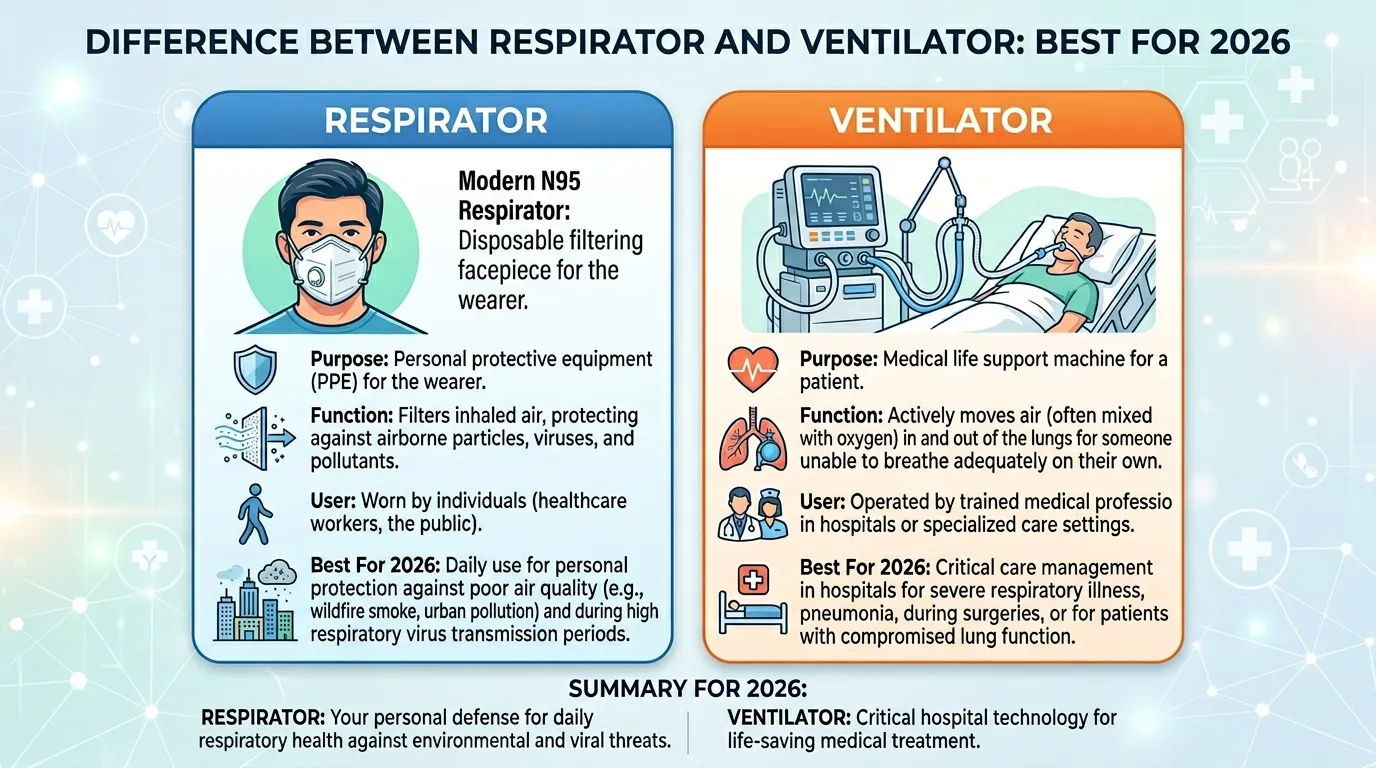
Respirator is a device worn on the face to protect a person from harmful air.
Ventilator is a medical machine that helps a patient breathe when they cannot breathe properly.
The main difference is air protection vs breathing support machine.
Why Is Their Difference Necessary to Know for Learners and Experts?
Clear understanding helps people follow safety advice, use correct terms, and avoid fear or misinformation. In society, accurate knowledge improves public health awareness and communication.
Pronunciation
Respirator
- US: /ˈres.pəˌreɪ.t̬ɚ/
- UK: /ˈres.pɪ.reɪ.tər/
Ventilator
- US: /ˈven.t̬ə.leɪ.t̬ɚ/
- UK: /ˈven.tɪ.leɪ.tər/
Let us now compare them.
Difference Between Respirator and Ventilator
1. Main Purpose
Respirator protects a healthy person from harmful particles.
- Example 1: Dust protection at work.
- Example 2: Mask for polluted air.
Ventilator helps a sick person breathe.
- Example 1: Patient in ICU.
- Example 2: Severe lung illness support.
2. Type of Device
Respirator is a wearable safety device.
- Example 1: Face mask.
- Example 2: Protective gear.
Ventilator is a medical machine.
- Example 1: Hospital equipment.
- Example 2: Life-support system.
3. Who Uses It
Respirator is used by workers or the public.
- Example 1: Construction workers.
- Example 2: Healthcare staff.
Ventilator is used by patients.
- Example 1: Critically ill person.
- Example 2: Surgery patient.
4. Function
Respirator filters air before you breathe it in.
- Example 1: Blocks dust.
- Example 2: Stops harmful particles.
Ventilator pushes air into lungs.
- Example 1: Controls breathing rate.
- Example 2: Supplies oxygen.
5. Location of Use
Respirator is used in daily environments.
- Example 1: Work sites.
- Example 2: Public spaces.
Ventilator is used in hospitals.
- Example 1: Intensive care unit.
- Example 2: Emergency rooms.
6. Level of Support
Respirator gives protection only.
- Example 1: Prevents inhalation of hazards.
- Example 2: No breathing assistance.
Ventilator gives full breathing support.
- Example 1: Helps weak lungs.
- Example 2: Can fully control breathing.
7. Complexity
Respirator is simple to use.
- Example 1: Wear and remove.
- Example 2: Basic design.
Ventilator is complex.
- Example 1: Needs trained staff.
- Example 2: Requires monitoring.
8. Examples
Respirator
- Example 1: N95 mask.
- Example 2: Industrial respirator.
Ventilator
- Example 1: ICU ventilator.
- Example 2: Emergency breathing machine.
9. Risk Level
Respirator reduces risk of exposure.
- Example 1: Safer breathing.
- Example 2: Preventive tool.
Ventilator is used in serious conditions.
- Example 1: Critical illness.
- Example 2: Life-saving support.
10. Daily Understanding
Respirator = protection device.
- Example 1: Mask for safety.
- Example 2: Prevent harm.
Ventilator = life-support machine.
- Example 1: Helps breathe.
- Example 2: Medical care tool.
Nature and Behaviour of Both
Respirator is preventive and protective.
Ventilator is reactive and life-saving.
Why Are People Confused About Their Use?
Both relate to breathing and air. During health crises, media used both terms often, which caused confusion among the public.
Table Showing Difference and Similarity
| Feature | Respirator | Ventilator | Similarity |
| Purpose | Protection | Breathing support | Related to air |
| Type | Wearable | Machine | Health use |
| User | Healthy person | Sick patient | Safety/health |
| Use Place | Public/work | Hospital | Medical context |
| Function | Filter air | Push air | Breathing-related |
Which Is Better in What Situation?
Respirator is better when you need protection from harmful air, dust, or disease particles.
Ventilator is essential when a patient cannot breathe properly and needs medical support.
Connotative Meaning
Respirator – Positive: safety, prevention
- Example: “Respirator use protects workers.”
Ventilator – Serious: medical, critical care
- Example: “The patient needed a ventilator.”
Five Frequently Asked Questions
1. Is a respirator the same as a ventilator?
No. They serve very different purposes.
2. Can a respirator help someone breathe?
No, it only filters air.
3. Where is a ventilator used?
In hospitals.
4. Who uses a respirator?
Workers and the public.
5. Which is life-saving?
A ventilator.
How Are Both Useful for Surroundings?
Respirators protect people from harmful air and improve safety. Ventilators save lives in hospitals and support critical care systems.
Final Words for Both
Respirator protects breathing.
Ventilator supports breathing.
Conclusion
The difference between respirator and ventilator is clear and important. A respirator is a protective device that filters air and keeps harmful particles out. A ventilator is a medical machine that helps or controls breathing in serious conditions. While both relate to air and lungs, their roles are very different. Understanding this difference improves health awareness and communication.

I’m Zahid Abbas, an educator, researcher, and digital publishing strategist with a passion for linguistics, grammar, and clear communication. As a content creator and SEO specialist, I craft research-driven, reader-focused content that empowers learners and makes knowledge accessible worldwide.