A traveler applying for a passport at United Nations office support center saw two terms on a form: citizenship and nationality. The traveler asked about the difference between citizenship and nationality. Many people use these words as if they mean the same thing. In daily talk, they often overlap, but in law they can differ.
The difference between citizenship and nationality is about legal status, rights, and connection to a state. When you understand the difference between citizenship and nationality, forms and legal documents become easier.
The difference between citizenship and nationality matters for travel, voting, and identity.
Key Difference Between the Both
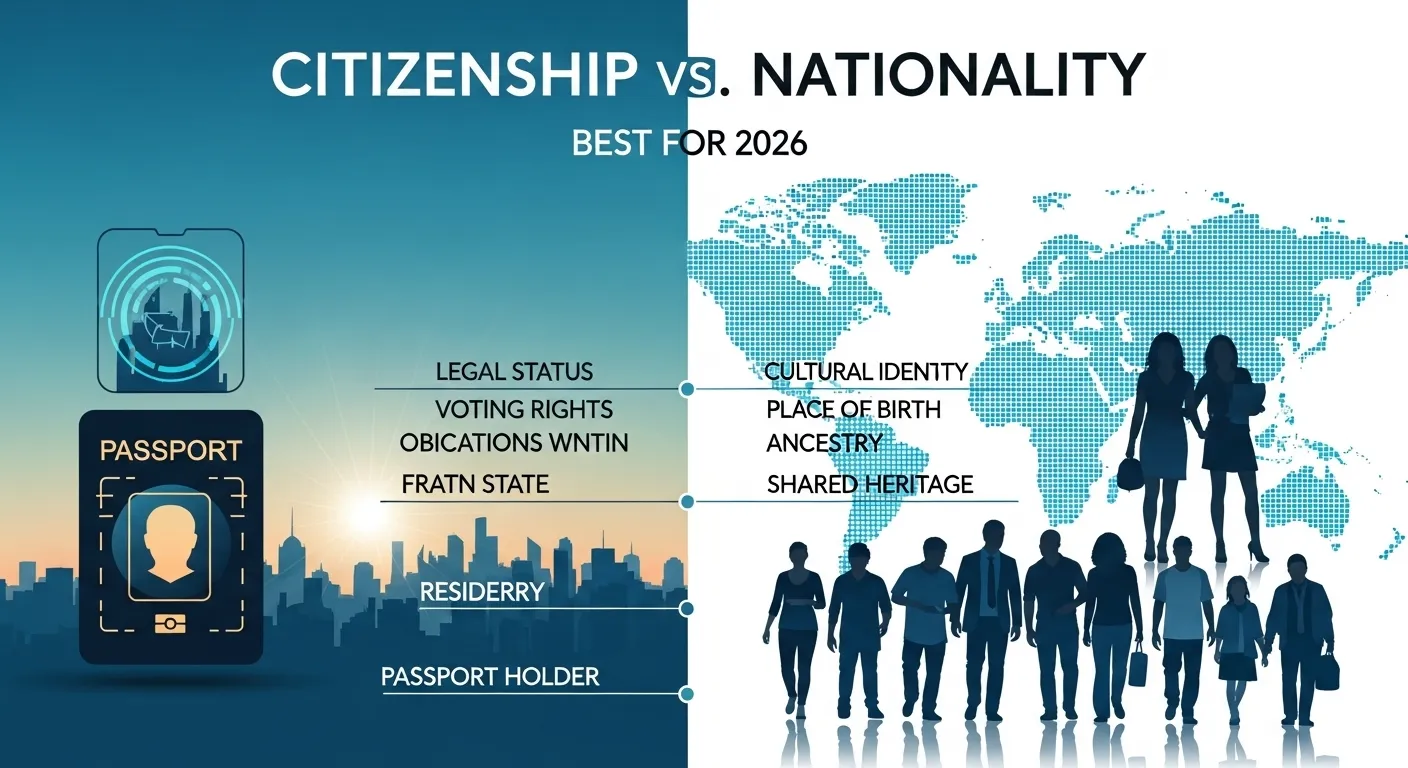
Citizenship usually means a legal status that gives full civil and political rights in a country.
Nationality usually means legal belonging or official connection to a nation or state.
The main difference is active legal membership vs broader legal/national belonging.
Why Is Their Difference Necessary to Know for Learners and Experts?
Travelers fill forms correctly. Students learn civics and law. Lawyers and officials need precise language. In society, clear identity records support rights and public services.
Pronunciation
Citizenship
- US: /ˈsɪt̬.ə.zən.ʃɪp/
- UK: /ˈsɪt.ɪ.zən.ʃɪp/
Nationality
- US: /ˌnæʃ.əˈnæl.ə.ti/
- UK: /ˌnæʃ.əˈnæl.ə.ti/
Now let us explore more.
Difference Between Citizenship and Nationality
1. Main Meaning
Citizenship means full membership in a state.
- Example 1: Right to vote.
- Example 2: Right to public office.
Nationality means legal bond to a state.
- Example 1: Passport nationality field.
- Example 2: State protection abroad.
2. Rights
Citizenship often includes political rights.
- Example 1: Voting.
- Example 2: Running for office.
Nationality may not always include all political rights in every system.
- Example 1: Overseas nationals in some countries.
- Example 2: Limited rights categories.
3. Focus
Citizenship focuses on participation.
- Example 1: Civic duties.
- Example 2: Community membership.
Nationality focuses on legal identity.
- Example 1: Country connection.
- Example 2: International recognition.
4. Documents
Citizenship may appear on naturalization papers.
- Example 1: Citizenship certificate.
- Example 2: Oath documents.
Nationality often appears on passports.
- Example 1: Nationality line.
- Example 2: Visa forms.
5. How Acquired
Citizenship may come by birth or naturalization.
- Example 1: Born in country.
- Example 2: Applied later.
Nationality may come by birth, descent, or law.
- Example 1: Parent from country.
- Example 2: Territorial rules.
6. Daily Use
Citizenship often used in civic context.
- Example 1: Good citizenship.
- Example 2: Citizenship class.
Nationality often used in travel context.
- Example 1: Airline form.
- Example 2: Immigration file.
7. Emotional Meaning
Citizenship can imply duty and belonging.
- Example 1: Serve community.
- Example 2: Follow laws.
Nationality can imply heritage or origin.
- Example 1: National identity.
- Example 2: Cultural roots.
8. Multiple Status
Citizenship can be dual in many countries.
- Example 1: Two passports.
- Example 2: Dual citizens.
Nationality can also be multiple depending on law.
- Example 1: By descent.
- Example 2: Mixed legal ties.
9. Legal Context
Citizenship used in constitutional rights matters.
- Example 1: Voting rights.
- Example 2: Public benefits.
Nationality used in international law.
- Example 1: Diplomatic protection.
- Example 2: Statelessness issues.
10. In Some Countries
Citizenship and nationality are treated as same term.
- Example 1: Common forms.
- Example 2: Everyday speech.
Nationality and citizenship can still differ in technical law elsewhere.
- Example 1: Special status groups.
- Example 2: Historical systems.
Nature and Behaviour of Both
Citizenship is practical and rights-based.
Nationality is identity-based and legal-international.
Why Are People Confused About Their Use?
Many countries use them interchangeably. On forms, both may point to the same country. That makes people think they always mean exactly the same thing.
Table Showing Difference and Similarity
| Feature | Citizenship | Nationality | Similarity |
| Core Idea | Full membership | Legal bond to state | Country identity |
| Rights | Often broader political rights | Varies by law | Legal status |
| Common Use | Civics | Passports/forms | Official records |
| Focus | Participation | Recognition | State connection |
| Can Overlap | Yes | Yes | Often same in practice |
Which Is Better in What Situation?
Use citizenship when discussing rights, voting, naturalization, or civic duties. It fits domestic legal topics.
Use nationality when discussing passports, immigration forms, international travel, or legal connection to a country. It fits cross-border contexts.
Use in Metaphors and Similes
Citizenship can be used broadly.
- Example: “Digital citizenship matters online.”
Nationality can describe identity themes.
- Example: “Nationality shaped the story.”
Connotative Meaning
Citizenship – Positive, responsible
- Example: “Good citizenship helps society.”
Nationality – Neutral or proud identity
- Example: “She values her nationality.”
Idioms and Proverbs
No fixed traditional idioms are strongly tied to these legal terms.
Common phrases:
- “Global citizenship”
- “Nationality by birth”
Five Frequently Asked Questions
1. Are citizenship and nationality the same?
Often yes in daily use, but not always in law.
2. Which is used on passports?
Usually nationality.
3. Which relates to voting rights?
Usually citizenship.
4. Can you have two citizenships?
Yes, in many countries.
5. Can nationality come from parents?
Often yes, depending on law.
How Are Both Useful for Surroundings?
They help governments manage rights, travel, services, and identity records. They support orderly society and international movement.
Final Words for Both
Citizenship stresses rights and participation.
Nationality stresses legal belonging to a country.
Conclusion
The difference between citizenship and nationality is important but often subtle. Citizenship usually refers to full legal membership with rights like voting. Nationality usually refers to legal belonging to a state and is common on passports and forms. In many places they overlap, but in some legal systems they differ. Knowing this helps with travel, law, and official documents.

I’m Zahid Abbas, an educator, researcher, and digital publishing strategist with a passion for linguistics, grammar, and clear communication. As a content creator and SEO specialist, I craft research-driven, reader-focused content that empowers learners and makes knowledge accessible worldwide.