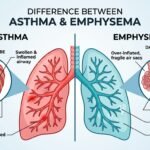
Asthma is a health problem that makes it hard to breathe. It can make the airways swell and become narrow. Emphysema is a lung disease that harms the tiny air sacs inside the lungs.
Imagine two people who have trouble breathing. One person has asthma. Dust may make this person cough or wheeze. The other person has emphysema. The tiny air sacs in this person’s lungs are damaged, so breathing can be hard. This shows the difference between asthma and emphysema. Both affect the lungs, but they are not the same. Learning the difference between asthma and emphysema helps people know more about lung health. It also helps them understand why doctors may give different care. Knowing the difference between asthma and emphysema can help us care for ourselves and others.
Key Difference Between the Both
Asthma makes the airways swell and become narrow. Emphysema harms the tiny air sacs in the lungs. Both can make it hard to breathe.
Why Is It Important to Know Their Difference?
It is good to know the difference between asthma and emphysema.
- For students: It helps them learn about the lungs.
- For doctors: It helps them choose the right care.
- For families: It helps them care for loved ones.
- For society: It helps people learn how to keep their lungs healthy.
Pronunciation of Asthma and Emphysema
- Asthma
- US: AZ-muh
- UK: AST-muh
- Emphysema
- US: em-fuh-SEE-muh
- UK: em-fuh-SEE-muh
Now, let us look at 10 easy points to learn more about these two lung problems.
Difference Between Asthma and Emphysema: 10 Points
1. Meaning
Asthma: It makes the airways swell and become narrow.
Examples:
- Dust may make a person with asthma cough.
- Cold air may make breathing hard.
Emphysema: It harms the tiny air sacs in the lungs.
Examples:
- A person may feel short of breath.
- A person may find it hard to breathe out.
2. Part of the Lungs
Asthma: It mainly affects the airways.
Examples:
- The airways may swell after contact with dust.
- The airways may become narrow during an asthma attack.
Emphysema: It harms the tiny air sacs in the lungs.
Examples:
- The air sacs may lose their shape.
- Damaged air sacs can make breathing out hard.
3. Causes
Asthma: Dust, pollen, smoke, and cold air may bring on symptoms.
Examples:
- Pollen may make a person cough.
- Smoke may make asthma worse.
Emphysema: Smoking is a main cause. Harmful dust and fumes can also harm the lungs.
Examples:
- Smoking for many years can damage the lungs.
- Bad fumes may harm the lungs over time.
4. Signs
Asthma: It may cause coughing, wheezing, and chest tightness.
Examples:
- A child may cough at night.
- A person may wheeze after running.
Emphysema: It often causes shortness of breath and a long-lasting cough.
Examples:
- A person may feel out of breath while walking.
- A person may find it hard to do housework.
5. When It Happens
Asthma: Signs may come and go.
Examples:
- Dust may cause a coughing spell.
- Cold air may make breathing hard.
Emphysema: Breathing trouble often gets worse slowly over time.
Examples:
- A person may feel short of breath when walking.
- Later, climbing stairs may become harder.
6. Can It Be Cured?
Asthma: There is no cure, but care can help control it.
Examples:
- A doctor may give an inhaler.
- Medicine may help stop asthma signs.
Emphysema: The lung damage cannot usually be fixed, but care can help.
Examples:
- Medicine may help a person breathe better.
- Stopping smoking can help prevent more harm.
7. Treatment
Asthma: A doctor may give an inhaler or other medicine.
Examples:
- A person uses a prescribed inhaler.
- A doctor gives medicine to help control asthma.
Emphysema: A doctor may give medicine, breathing help, or special exercises.
Examples:
- A person may join a lung exercise program.
- Some people may need extra oxygen.
8. Who Can Get It?
Asthma: Both children and adults can have asthma.
Examples:
- A child may have asthma at school.
- An adult may get asthma later in life.
Emphysema: It is more common in older adults, often those who smoked for many years.
Examples:
- An older person who smoked may get emphysema.
- Harmful fumes may raise the risk.
9. Daily Life
Asthma: Many people can play, work, and study when their asthma is well controlled.
Examples:
- A child may play after following their care plan.
- An adult may go to work with the right care.
Emphysema: It can make daily tasks harder.
Examples:
- A person may need to rest while walking.
- A person may take breaks while cleaning.
10. How Doctors Find It
Asthma: Doctors ask about signs and may test how well a person breathes.
Examples:
- A doctor may ask about coughing at night.
- A breathing test may help find asthma.
Emphysema: Doctors may use breathing tests and scans to check for lung damage.
Examples:
- A breathing test checks how air moves out.
- A scan may show damage in the lungs.
Important: Only a health care worker can tell if someone has asthma or emphysema. If a person has trouble breathing, they should get medical help.
Also read more about:https://compareact.com/difference-between-squatter-and-trespasser-2/
Nature of Asthma and Emphysema
Nature of Asthma
Asthma signs may come and go. Dust, smoke, pollen, or cold air may make them worse. With the right care, many people with asthma can enjoy daily life.
Nature of Emphysema
Emphysema harms the tiny air sacs in the lungs. It often gets worse slowly. Care can help people breathe better, but it cannot usually fix the damage.
Why Do People Confuse Asthma and Emphysema?
People may confuse these words because both are lung problems. Both can cause coughing, wheezing, and trouble breathing.
But they are not the same. Asthma affects the airways. Emphysema harms the tiny air sacs in the lungs. A doctor can do tests to find the problem.
Difference and Similarity Between Asthma and Emphysema
| Point | Asthma | Emphysema |
| Main problem | Narrow airways | Damaged air sacs |
| Cough | Can happen | Can happen |
| Shortness of breath | Yes | Yes |
| Signs | May come and go | Often get worse slowly |
| Main cause or risk | Dust, pollen, smoke, and other triggers | Smoking and harmful fumes |
| Treatment | Medicine and inhalers | Medicine and other care |
| Can it be cured? | No, but it can be controlled | Damage cannot usually be fixed |
| Who can get it? | Children and adults | More common in older adults |
| Similarity | Both affect the lungs | Both affect the lungs |
| Main goal | Control signs | Help breathing and prevent more harm |
Which Is Better in What Situation?
When Is Asthma Easier to Manage?
Asthma may be easier to manage when its signs are mild and the medicine works well. A person may be able to play, study, and work. They should follow the doctor’s advice and stay away from things that make asthma worse. But asthma can also be serious. A person should not stop taking medicine without asking a doctor. If breathing becomes very hard, they need urgent help.
When Does Emphysema Need Special Care?
Emphysema needs care to help a person breathe better. A doctor may give medicine or suggest special exercises. Stopping smoking is very important for people who smoke. Some people may need extra oxygen. The right care depends on how the lungs are working. Emphysema can make walking and other daily tasks hard, so help from family and health workers can be useful.
Neither condition is better than the other. Both need the right care.
Metaphors and Similes for Asthma and Emphysema
A metaphor says one thing is another thing. A simile compares things using words like as or like.
Asthma
- Metaphor: Asthma is a tight gate in the airways.
- Simile: Breathing during an asthma attack can feel like blowing through a thin straw.
Emphysema
- Metaphor: Emphysema is damage to the lungs’ tiny air balloons.
- Simile: Damaged air sacs are like old balloons that do not work well.
These are simple comparisons, not medical facts.
Connotative Meaning of Asthma and Emphysema
Connotation means the feeling a word may give us.
Asthma
- Positive: It may show that a person is learning to care for their health. Example: “Sara learned how to manage her asthma.”
- Negative: It may make people think of breathing trouble. Example: “Ali felt scared when asthma made breathing hard.”
- Neutral: It names a health problem. Example: “The doctor talked about asthma.”
Emphysema
- Positive: It may remind us to help and care for others. Example: “Mina’s family helped her live with emphysema.”
- Negative: It may bring worry about lung damage. Example: “The family felt sad after learning about the lung damage.”
- Neutral: It names a lung disease. Example: “The doctor checked for emphysema.”
Idioms and Proverbs Related to Asthma and Emphysema
There are no common sayings made just for these two words. But these sayings can relate to lung health.
– “Prevention is better than cure.” Example: Staying away from smoke can help protect the lungs.
– “Where there is a will, there is a way.” Example: With good care, a person with a lung problem may find safe ways to enjoy life.
– “Take a deep breath.” Example: A person may use this saying to help someone stay calm. A person with breathing trouble should follow their doctor’s advice.
Books Related to Asthma and Emphysema
These books are about lung health or emphysema.
- The Animator’s Survival Kit is not about these lung problems, so it is not related to this topic.
- Coping with Bronchitis and Emphysema — Health guide; writer: Tom Smith; 1994.
- None Need Suffer from Asthma: Or in All Probability Develop Emphysema — Health book; writer: Jacob John Robbins; 1985.
Movies Related to Asthma and Emphysema
These are educational films about the conditions, not famous story movies.
- Out of Breath — 1982, Australia. A film about work-related asthma.
- A Fight for Breath: Emphysema — 1974, Canada. A film about emphysema.
- An Attack on Asthma — Australia; the release year is not clear. It is about asthma and its care.
Five possible Asked Questions
1. What is the main difference between asthma and emphysema?
Asthma makes the airways narrow. Emphysema harms the tiny air sacs in the lungs.
2. Can a person have both?
Yes. A person can have both asthma and emphysema.
3. Are asthma and emphysema the same?
No. Both affect breathing, but they harm the lungs in different ways.
4. Can these conditions be cured?
Asthma can be controlled with care. Emphysema damage cannot usually be fixed, but treatment can help.
5. When should a person see a doctor?
A person should see a doctor if they often cough, wheeze, or feel short of breath. If they are struggling to breathe, get emergency help.
How Are Asthma and Emphysema Useful for Our Surroundings?
Asthma and emphysema are health problems, so they are not useful by themselves. But learning about them can help people care for each other.
- At school: Children can learn why clean air is important.
- At home: Families can keep their homes free from smoke.
- At work: People can use care around dust and harmful fumes.
- In society: People can support those who have trouble breathing.
Clean air and good care can help protect our lungs.
Final Words for Asthma and Emphysema
Asthma and emphysema are two different lung problems. Asthma makes the airways narrow. Emphysema harms the tiny air sacs in the lungs. Both can make breathing hard, but they need different care. Doctors can help people find the right treatment. Staying away from smoke and harmful air can also help protect the lungs. When we learn about these conditions, we can better care for ourselves and others.
Conclusion
The difference between asthma and emphysema is easy to learn. Asthma makes the airways swell and become narrow. Emphysema harms the tiny air sacs in the lungs. Both can cause coughing and trouble breathing. But their causes and care may be different. Asthma signs may come and go, while emphysema often gets worse over time. Doctors can test the lungs and help people get the right care. We can also help protect our lungs by staying away from smoke and harmful air. If someone has trouble breathing, they should get medical help. Learning about these lung problems helps us care for ourselves, our families, and our community.

I’m Zahid Abbas, an educator, researcher, and digital publishing strategist with a passion for linguistics, grammar, and clear communication. As a content creator and SEO specialist, I craft research-driven, reader-focused content that empowers learners and makes knowledge accessible worldwide.