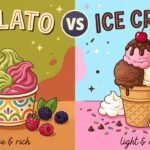
In 1686, a Sicilian man named Francesco Procopio dei Coltelli opened a café in Paris called Café Procope. He sold cold, creamy treats, much like the Italian frozen dessert we call gelato. The café became very popular, and the sweet treat spread across Europe. Today, people can buy two kinds of frozen dessert in the same shop: gelato and ice cream. They look alike, but the difference between gelato and ice cream is easy to taste. The Italian word “gelato” simply means “frozen.”
Gelato is a soft, smooth Italian frozen dessert made with more milk than cream. Ice cream is a frozen dessert made with more cream, and it is lighter and fluffier. Once you learn the difference between gelato and ice cream, you will know why they feel and taste different.
Key difference between gelato and ice cream
The simplest way to remember it: gelato has less fat and less air, so it is denser and has a stronger flavour, while ice cream has more fat and more air, so it is creamier and lighter. Gelato is also served a little warmer, which makes it softer and silkier.
Why is this difference important for learners and experts?
Students who know the difference between gelato and ice cream can read menus, labels and food stories with more skill. Food experts and shop owners need it to make and sell the right product. It also matters in society. Frozen desserts give jobs to farmers, shop workers and makers. They bring families and friends together. When people know what they are buying, they can pick the treat that fits their taste, their budget and their health plans.
Pronunciation
| Word | US English | UK English |
| Gelato | /dʒəˈlɑː.t̬oʊ/ (juh-LAH-toh) | /dʒəˈlɑː.təʊ/ (juh-LAH-toh) |
| Ice cream | /ˈaɪs ˌkriːm/ (EYES kreem) | /ˌaɪs ˈkriːm/ (eyes KREEM) |
In the US, the stress is on “ice.” In the UK, the stress is usually on “cream.”
Now you know what the words mean and how to say them. Let us look at the differences, one by one.
Difference Between Gelato and Ice Cream
1. Meaning and Origin
Gelato is an Italian frozen dessert. Ice cream is a frozen dessert made in many countries, and many people link its early history to Europe and the United States.
- Gelato example: An Italian shop sells pistachio gelato in a small cup.
- Ice cream example: An American shop sells a big scoop of vanilla ice cream in a cone.
2. Fat
Gelato has less fat. In the US, ice cream must have at least 10% milk fat. Gelato often has about 4% to 9%.
- Gelato example: A gelato made mostly with milk has a lighter feel.
- Ice cream example: A premium ice cream made with lots of cream feels rich and heavy.
3. Milk and Cream
Gelato uses more milk than cream. Ice cream uses more cream than milk.
- Gelato example: A cook mixes a lot of milk with sugar and a little cream.
- Ice cream example: A cook mixes a lot of cream with sugar and a little milk.
4. Air
Ice cream is whipped with a lot of air, so it is fluffy. Gelato is churned slowly with little air, so it is dense. The amount of air is called “overrun.”
- Gelato example: A scoop of gelato feels heavy in the hand.
- Ice cream example: A scoop of ice cream feels light and fluffy.
5. Churning Speed
Gelato is churned slowly. Ice cream is churned fast.
- Gelato example: A gelato maker lets the machine turn gently.
- Ice cream example: A factory machine whips ice cream fast to add air.
6. Serving Temperature
Gelato is served a little warmer, so it is softer. Ice cream is kept very cold, so it is firmer.
- Gelato example: Gelato at a shop is soft enough to spread with a flat spatula.
- Ice cream example: Ice cream from the home freezer can be hard and need to sit for a few minutes.
7. Texture
Gelato is smooth, silky and a bit stretchy. Ice cream is creamy and light.
- Gelato example: Gelato feels like soft silk on the tongue.
- Ice cream example: Ice cream feels like cool whipped cream.
8. Flavour
Gelato has a stronger and cleaner flavour, because it has less fat to cover the taste. Ice cream has a milder, creamier flavour.
- Gelato example: Hazelnut gelato tastes strongly of fresh nuts.
- Ice cream example: Hazelnut ice cream tastes sweet and creamy, with a softer nut flavour.
9. Eggs
Many gelatos are made without egg yolks, though some recipes use them. Many ice creams, especially the French style, use egg yolks to make a custard base.
- Gelato example: A fruit gelato may have no eggs at all.
- Ice cream example: A rich vanilla custard ice cream has egg yolks.
10. Serving and Storing
Gelato is best eaten fresh from the shop, and it melts quickly. Ice cream is made to last a long time in the freezer.
- Gelato example: A tourist eats gelato right away on a hot day.
- Ice cream example: A family keeps a tub of ice cream in the freezer for weeks.
Nature and Behaviour of Gelato
Gelato is soft, smooth and bold. It is made slowly, with little air, so a small scoop has a lot of taste. It is served a bit warmer than ice cream, so the flavour reaches your tongue quickly. Gelato melts faster, so people enjoy it right away. It is often made in small batches in a shop. Gelato shops show their flavours in a case, and the gelato is spread with a flat paddle. It is a treat for sitting, strolling and sharing.
Also read more about:https://compareact.com/difference-between-squatter-and-trespasser-2/
Nature and Behaviour of Ice Cream
Ice cream is creamy, light and friendly. It has more cream and more air, so it feels fluffy and rich. It is kept very cold, so it stays firm and lasts a long time in the freezer. That makes it easy to share at home, at parties and at picnics. It also works well as a base for sundaes, shakes and cakes. Ice cream comes in many flavours and styles, from plain vanilla to wild mixes with cookies and candy.
Why Are People Confused About Gelato and Ice Cream?
- Both are cold and sweet. They look and feel alike at first.
- Both use milk, sugar and flavours. The base is similar.
- Gelato is just “Italian ice cream.” Many people use that short name.
- Shops use the words freely. Some shops call a regular ice cream “gelato” to sound special.
- The rules are different in each country. The fat limits and labels change from place to place.
Difference and Similarity Table
| Feature | Gelato | Ice Cream |
| Home country | Italy | Many countries |
| Fat | Lower (about 4% to 9%) | Higher (at least 10% in the US) |
| Milk and cream | More milk | More cream |
| Air | Little | A lot |
| Churning | Slow | Fast |
| Serving temperature | Warmer | Colder |
| Texture | Dense and silky | Light and creamy |
| Flavour | Strong and clean | Milder |
| Eggs | Often none | Often egg yolks |
| Made with milk and sugar | Yes | Yes |
| Frozen dessert | Yes | Yes |
| Many flavours | Yes | Yes |
Which Is Better in What Situation?
Gelato is better when you want a strong flavour in a small, fresh treat. If you are on a walk, on holiday or at a special shop, gelato is a lovely choice. It tastes bold, feels smooth and is served fresh. It is often lighter in fat, so a small cup feels just right after a meal. and It is a good pick when you want to taste real fruit, nuts or chocolate. Just eat it quickly, because it melts fast, and it does not keep well at home.
Ice cream is better when you want to share, store or make a big dessert. If you plan a party, a picnic or a family night, ice cream is a smart choice. It stays firm and lasts in the freezer. It is great for sundaes, milkshakes and ice cream cakes, and it holds toppings well. Because it is creamy and light, it feels like a comfort food. Pick ice cream when you want a big tub, a long time and many scoops.
How the Words Are Used in Metaphors and Similes
- Gelato as a metaphor: “The dessert was silk in a cup.”
- Gelato as a simile: “The pistachio gelato tasted as bold as a handful of fresh nuts.”
- Ice cream as a metaphor: “A summer day is ice cream for the soul.”
- Ice cream as a simile: “The little boy’s joy melted away like ice cream in the sun.”
Connotative Meaning of Gelato and Ice Cream
A connotation is the feeling a word gives, besides its plain meaning.
Gelato is mostly positive. It makes people think of Italy, holidays and a fancy treat. It can sound a little negative if it feels too costly.
- Positive: “We ate gelato by the fountain and felt like we were on holiday.”
- Negative: “That tiny cup of gelato was too expensive.”
Ice cream is mostly positive. It makes people think of childhood, fun and comfort. It can feel neutral in a shop list, and negative when people talk about too much sugar.
- Positive: “Ice cream always cheers me up.”
- Negative: “He should not eat so much ice cream every night.”
Idioms and Proverbs Related to the Words
There are no old idioms with the exact word “gelato.” But these sayings fit these desserts well.
- “I scream, you scream, we all scream for ice cream”: a fun chant that shows how much people love ice cream. It comes from a song in the 1920s. Example: “When the ice cream truck came, the children shouted, ‘I scream, you scream, we all scream for ice cream!'”
- “The cherry on top”: the last small thing that makes something perfect. Example: “The sunny weather was the cherry on top of our trip.”
- “Break the ice”: do something to make people feel at ease. Example: “He shared gelato with the new student to break the ice.”
- “Sweet tooth”: a love of sweet foods. Example: “She has a sweet tooth, so she always orders gelato.”
- “La dolce vita”: an Italian saying for “the sweet life.” Example: “Eating gelato in the sun, he felt la dolce vita.”
- “Dolce far niente”: an Italian saying for “the sweetness of doing nothing.” Example: “On Sunday, they enjoyed dolce far niente, with ice cream and a good book.”
Works of Literature on Gelato and Ice Cream
Few books have “gelato” in the title. These books are about ice cream, Italy and food.
- Ice Cream! The Whole Scoop: Food guide; Gail Damerow, 1991
- Under the Tuscan Sun: Memoir about life in Italy; Frances Mayes, 1996
- The Ultimate Ice Cream Book: Cookbook; Bruce Weinstein, 1999
- Eat, Pray, Love: Memoir with scenes in Italy; Elizabeth Gilbert, 2006
- Ice Cream: A Global History: Food history; Laura B. Weiss, 2011
- Jeni’s Splendid Ice Creams at Home: Cookbook; Jeni Britton Bauer, 2011
Movies Related to Gelato and Ice Cream
No famous film is named “Gelato.” These films have well-known gelato or ice cream moments.
- Roman Holiday: Romantic comedy with a gelato scene; 1953, USA
- Ice Cream Man: Horror comedy; 1995, USA
- Little Miss Sunshine: Comedy-drama with an ice cream scene; 2006, USA
- Eat Pray Love: Drama with scenes in Italy; 2010, USA
Five possible Asked Questions
1. Is gelato healthier than ice cream? Gelato often has less fat, but it can still have a lot of sugar. Read the label and keep your portions small.
2. Why is gelato denser than ice cream? It is churned slowly, so it has less air. Less air means a heavier, thicker scoop.
3. Does gelato have eggs? Often not, but some recipes do. Ice cream often has egg yolks, especially in the French style.
4. Why is gelato not frozen hard? It is served at a warmer temperature than ice cream. This makes it soft and silky, and it lets the flavour come through.
5. Can I make gelato at home? Yes. You can use a home machine and a simple recipe with milk, cream and sugar. But shop gelato is made in special machines, so it may feel a little different.
How Both Are Useful for Our Surroundings
Gelato and ice cream bring more than a sweet taste. They help local shops and tourist towns do well. They cool us down on hot days and bring families and friends together. A shared cone can start a good chat or a new friendship. Shops can also use local fruit and nuts, which helps nearby farms. When we enjoy them in small amounts, they add joy to our days and our communities.
Final Words for Both
Gelato: a silky, dense and bold Italian treat. Enjoy it fresh, in a small cup, and taste every flavour.
Ice cream: a creamy, light and shareable treat. Enjoy it at home, at parties and in sundaes.
Conclusion
The difference between gelato and ice cream is simple once you taste it. Gelato has more milk, less fat and less air. It is churned slowly and served warmer, so it is dense, silky and full of flavour. Ice cream has more cream, more fat and more air. It is churned fast and kept colder, so it is light, creamy and long-lasting. Both are frozen desserts, both use milk and sugar, and both are loved around the world, so people often mix them up. Next time you stand at the dessert shop, ask two questions. Do I want a bold, soft treat right now? Or a creamy, cold treat to share and keep? The answers will tell you what to order.

I’m Zahid Abbas, an educator, researcher, and digital publishing strategist with a passion for linguistics, grammar, and clear communication. As a content creator and SEO specialist, I craft research-driven, reader-focused content that empowers learners and makes knowledge accessible worldwide.