When you shop for perfume, you may notice the same fragrance sold as EDP and EDT. The bottles may look almost identical, and sometimes the names are the same. So, what is the difference between EDP and EDT?
The main difference is fragrance concentration. EDP stands for Eau de Parfum, while EDT stands for Eau de Toilette. EDP usually contains a higher concentration of aromatic compounds than EDT, which generally gives it a richer scent and longer wear. EDT is lighter and often feels fresher, making it a popular choice for daytime and warm weather.
Understanding this difference can help you choose the right fragrance for your lifestyle, budget, weather, and occasion.
EDP vs EDT: Quick Answer
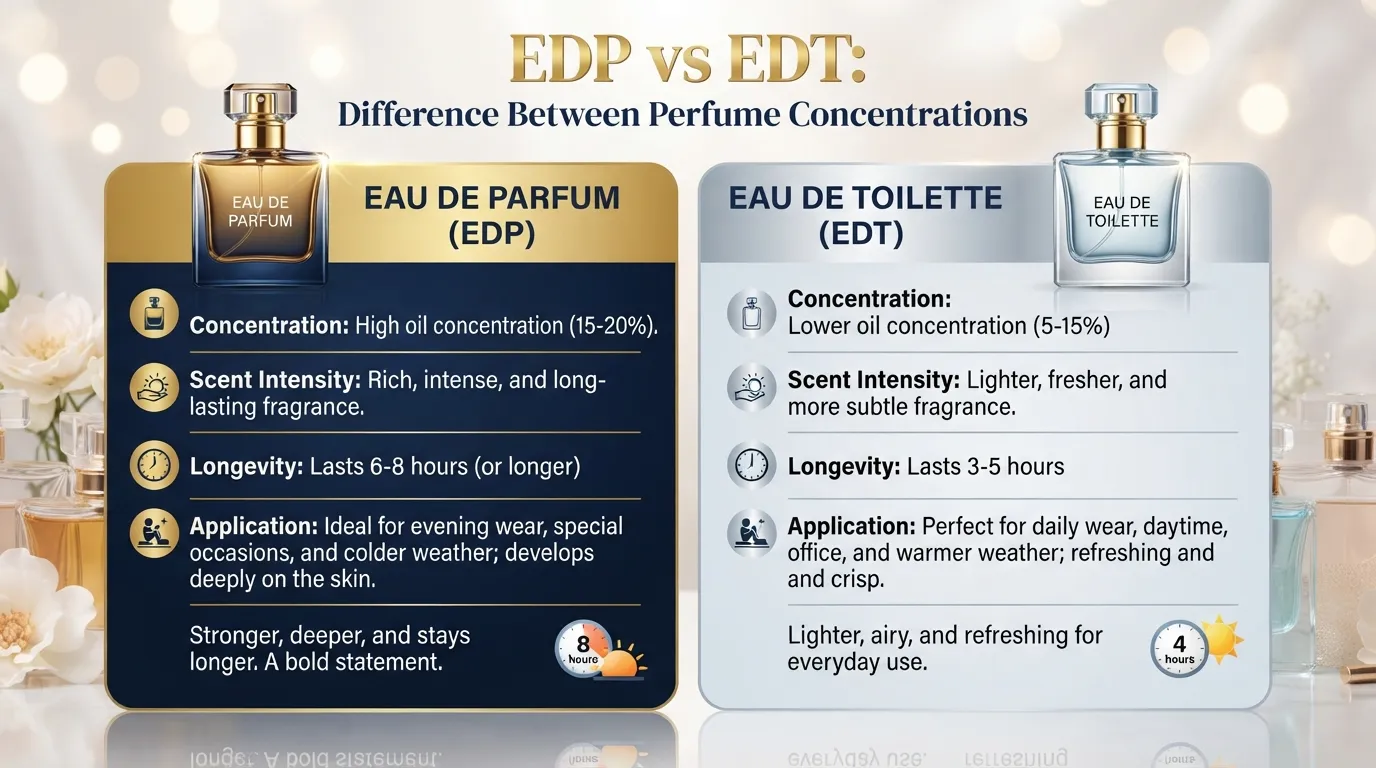
EDP (Eau de Parfum) has a higher fragrance concentration, usually around 15–20%, while EDT (Eau de Toilette) is generally around 5–15%. Because of this, EDP usually lasts longer and smells richer, while EDT tends to feel lighter, brighter, and more refreshing.
Neither is automatically better. The better choice depends on how strong you want your fragrance to feel and where you plan to wear it.
What Is EDP?
EDP stands for Eau de Parfum. It is a fragrance category with a relatively high concentration of aromatic compounds.
EDP commonly falls around the 15–20% concentration range, although the exact formula can vary from one brand to another.
Because it generally contains more fragrance material than EDT, EDP often gives a deeper and longer-lasting impression. It is a common choice for people who want a fragrance that can stay noticeable for much of the day.
For example, an EDP with warm notes such as vanilla, amber, or woods may feel rich and smooth, making it suitable for evening wear or cooler weather.
What Is EDT?
EDT stands for Eau de Toilette. It generally has a lower concentration of aromatic compounds than EDP, commonly around 5–15%.
EDT is usually lighter and can have a fresher opening. It is often a good option for daytime use, especially when you do not want a heavy fragrance.
For example, a fresh citrus or aquatic EDT can work well for a warm day, an office, or casual activities.
Key Differences Between EDP and EDT
1. Fragrance Concentration
The biggest difference is concentration.
- EDP: Usually around 15–20%
- EDT: Usually around 5–15%
These are general ranges, not strict rules. Fragrance formulas vary between brands, so the label alone cannot tell you exactly how much fragrance oil a product contains.
2. Longevity
EDP generally lasts longer on the skin than EDT because it usually has a higher concentration.
As a broad guide, EDP may last around 5–8 hours, while EDT may last around 3–5 hours. Actual performance can vary greatly depending on the formula, skin, weather, application, and other factors.
So, if you want fewer reapplications during the day, EDP may be the more convenient option.
3. Scent Intensity
EDP often feels richer and more substantial, while EDT usually feels lighter.
This does not mean EDT is always weak. Some EDTs have excellent projection, particularly during the first part of wear. The individual fragrance formula matters just as much as its concentration.
4. Best Time to Wear
EDP can work well for:
- Evening events
- Dates
- Workdays
- Special occasions
- Cooler weather
- Long days when you want lasting fragrance
EDT can work well for:
- Daytime
- Casual outings
- Warm weather
- Office environments
- Outdoor activities
- Situations where you prefer a lighter scent
These are practical tendencies rather than strict rules. You can wear either concentration whenever you like.
5. Price
EDP is often more expensive than EDT when comparing similar fragrances and bottle sizes because it generally contains a higher concentration of fragrance materials.
However, price depends on the brand, ingredients, bottle size, marketing, and formulation. A cheaper EDT is not necessarily lower quality than a more expensive EDP.
6. Overall Feel
EDP often gives a richer, warmer, and longer-lasting experience.
EDT often gives a lighter, fresher, and more energetic experience.
The difference can be especially noticeable when a brand creates both versions of the same fragrance.
EDP vs EDT Comparison Table
FeatureEDPEDTFull nameEau de ParfumEau de ToiletteTypical concentrationAbout 15–20%About 5–15%General longevityOften longerOften shorterOverall feelRicher and deeperLighter and fresherCommon useDay or eveningMainly daytime/casualWarm weatherCan work well, depending on scentOften comfortableReapplicationUsually less frequentMay be needed soonerPriceOften higherOften lower
The concentration ranges are approximate because fragrance terminology is not completely standardized across every brand.
Similarities Between EDP and EDT
Although EDP and EDT have important differences, they also have several things in common.
Both:
- Are types of fragrance.
- Contain aromatic compounds in a carrier, commonly alcohol and water.
- Can be available in similar scent families.
- Can be worn by anyone regardless of gender.
- Can be used during the day or evening.
- May come in versions of the same fragrance.
- Can smell excellent when properly matched to the wearer and occasion.
The terms describe fragrance concentration, not whether a perfume is masculine, feminine, expensive, or high quality.
Why Are EDP and EDT Confused?
EDP and EDT are easy to confuse because brands sometimes sell the same fragrance in both forms.
For example, you may find a perfume with the same fragrance name available as both an EDT and an EDP. This can make it seem as though the only difference is the label.
There can be more going on. When a fragrance is offered in different concentrations, the formula may also be adjusted. As a result, the EDP and EDT versions can smell noticeably different even when they share the same fragrance concept.
Another common misunderstanding is that a higher concentration automatically means a “better” perfume. It does not. Concentration mainly describes the strength and composition of the fragrance; personal preference still matters.
When Should You Choose EDP?
Choose EDP if you prefer a fragrance that generally:
- Lasts longer
- Feels richer
- Requires fewer touch-ups
- Works well for evening occasions
- Can carry through a long workday
- Feels more noticeable on the skin
EDP can be particularly useful if you do not want to carry a perfume bottle around for frequent reapplication.
For example, if you leave home in the morning and want your fragrance to remain noticeable into the afternoon, EDP may be a practical choice.
When Should You Choose EDT?
Choose EDT if you prefer something that generally:
- Feels lighter
- Smells fresh and airy
- Works well during the daytime
- Suits warm weather
- Is comfortable in an office or shared space
- Can be reapplied when needed
EDT can be a good choice when you want to smell fresh without creating a strong scent cloud around you.
Can EDP and EDT Be Used Interchangeably?
Sometimes, yes—but they are not exactly the same.
If a fragrance is available as both EDP and EDT, the two versions may share many of the same recognizable notes. However, their concentration and formulation can affect how they develop on your skin.
An EDT may open more brightly and feel lighter, while the EDP may feel deeper and last longer.
So, if you already enjoy an EDT, that does not guarantee that you will prefer its EDP version. Testing both on your skin is the best way to compare them.
Which Is Better: EDP or EDT?
There is no universal winner.
EDP is better when you want longer wear, a richer scent, or fewer reapplications.
EDT is better when you want something lighter, fresher, and easy to wear during the day.
Either can be better when you simply prefer how it smells on your skin.
If you live in a hot climate, EDT can feel more comfortable for daytime use, while a suitable EDP can work well when you want stronger or longer-lasting performance. The fragrance itself and the amount you apply also matter.
Common Mistakes With EDP and EDT
Mistake 1: Thinking EDP always lasts longer
EDP generally has the advantage, but longevity is not determined by concentration alone. Ingredients, formula, skin chemistry, temperature, and application all affect performance.
Mistake 2: Assuming EDT is low quality
EDT is not an inferior version simply because it has a lower concentration. Many popular and well-designed fragrances are sold as EDT.
Mistake 3: Assuming higher concentration means better
A stronger fragrance is not automatically better. Some people prefer a subtle scent, while others want something more noticeable.
Mistake 4: Thinking EDP is only for nighttime
EDP can be worn during the day. The scent profile and the number of sprays matter more than the EDP label alone.
Mistake 5: Believing the concentration guarantees a specific number of hours
There is no universal wear time for every EDP or EDT. Published estimates are useful guidelines, but individual results vary.
Frequently Asked Questions About EDP and EDT
What is the main difference between EDP and EDT?
The main difference is fragrance concentration. EDP generally contains a higher concentration of aromatic compounds than EDT, so it often lasts longer and feels richer.
Is EDP stronger than EDT?
Generally, yes. EDP usually has a higher concentration and often produces a richer scent. However, the strength and projection of a fragrance also depend on its formula.
Does EDP last longer than EDT?
Usually, but not always. EDP commonly lasts longer because of its higher concentration, but ingredients and formulation can make a major difference.
Is EDT better for summer?
Often, yes. A fresh EDT can feel lighter and more comfortable in warm weather. However, a suitable EDP can also work well in summer if applied appropriately.
Is EDP better for winter?
EDP can be a good choice for colder weather because richer fragrances often perform well in cool conditions. Still, the scent profile matters more than the label alone.
Is EDP more expensive than EDT?
It is often more expensive because it generally contains a higher concentration of fragrance materials. But brand, ingredients, bottle size, and formulation also affect price.
Should I buy EDP or EDT?
Choose EDP if you prioritize longer wear and a richer scent. Choose EDT if you prefer a lighter, fresher fragrance. If possible, test both before buying.
Conclusion
The main difference between EDP and EDT is their fragrance concentration. EDP, or Eau de Parfum, generally contains a higher concentration of aromatic compounds than EDT, or Eau de Toilette. As a result, EDP often provides longer wear and a richer scent, while EDT usually offers a lighter and fresher experience.
That does not make one universally better. If you want a fragrance for long days, evenings, or occasions where you prefer stronger performance, EDP may be the better fit. If you want something fresh and easy for daytime or warm weather, EDT may suit you better.
Ultimately, the best choice is the fragrance that smells good to you and fits the occasion.