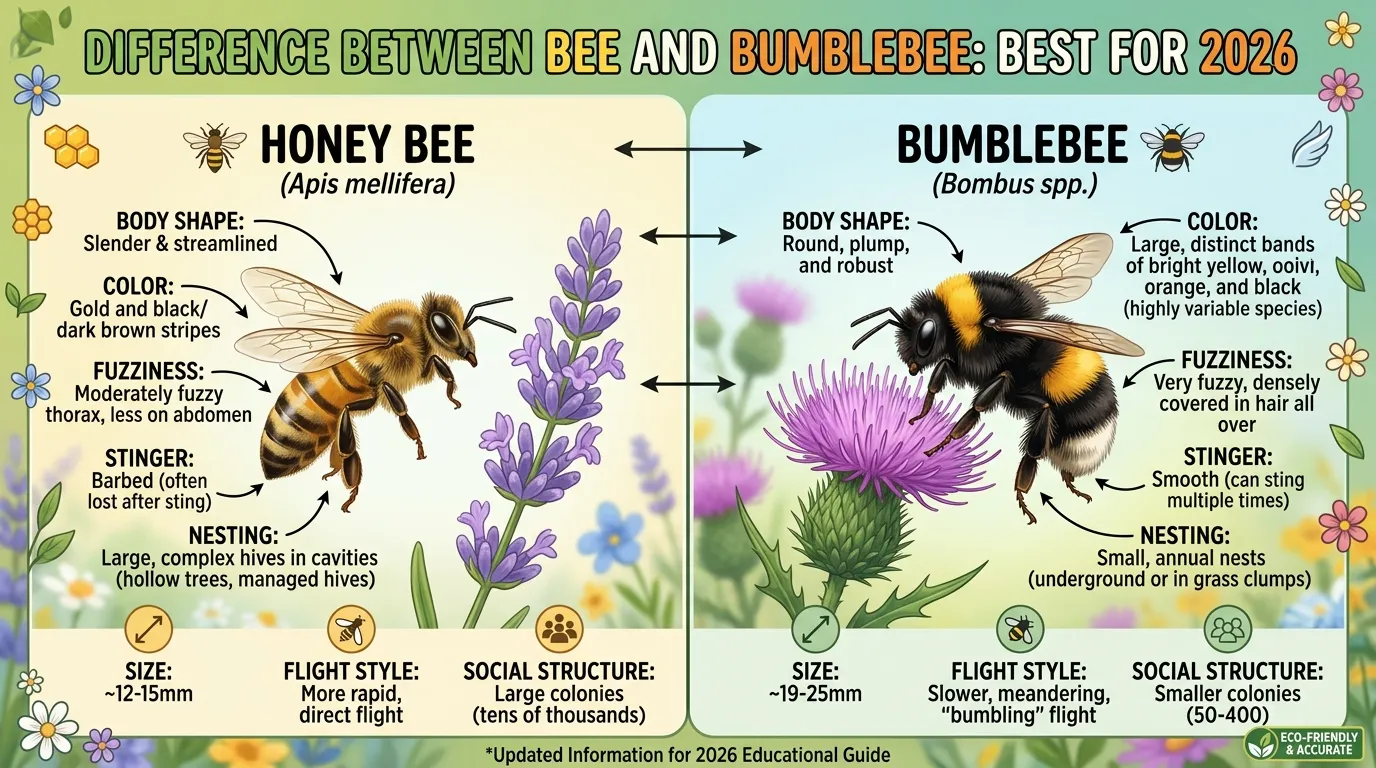
One day, a child saw a small insect on a flower. Later, the child saw a bigger and fuzzier insect on another flower. Both insects looked similar. The child asked, “Is that a bee too?”
Many people ask this question.
The difference between bee and bumblebee can be hard to see at first. Both insects visit flowers. Both collect nectar and pollen. Both help plants grow.
Still, they are not the same.
Learning the difference between bee and bumblebee is useful for students, nature lovers, and English learners. It helps you understand insects better and use the correct words when talking about them.
In this guide, you will learn what bees and bumblebees are, how they work, and the main ways they differ.
What is “Bee”?
A bee is a flying insect that collects nectar and pollen from flowers.
Many kinds of bees exist around the world. Honey bees are one of the most common types.
Bees help pollinate plants. This means they move pollen from one flower to another.
History of Bee
The word “bee” is very old. It comes from ancient English words used many hundreds of years ago. People have known about bees for thousands of years because bees make honey and help crops grow. Ancient people kept bees in simple hives and collected honey for food. Over time, bees became important in farming because they help pollinate fruits, vegetables, and flowers. Today, bees are found on every continent except Antarctica. Scientists study bees because they play a very important role in nature and food production.
What is “Bumblebee”?
A bumblebee is a large and fuzzy type of bee.
It has a round body and thick hair.
Bumblebees are known for their loud buzzing sound.
History of Bumblebee
The word “bumblebee” comes from the word “bumble,” which means to buzz or hum. People gave this name to the insect because of the sound it makes while flying. Bumblebees have lived on Earth for millions of years. They are important pollinators and can work in cooler weather than many other bees. Farmers often use bumblebees to help pollinate crops such as tomatoes and berries. Today, bumblebees are found in many parts of the world and are loved for their gentle nature and fuzzy appearance.
Bee vs Bumblebee
Bee: A general name for many kinds of bees.
Bumblebee: A large, hairy type of bee.
Now let’s look at their differences in detail.
How Bee Works
Key Features
- Small body
- Collects nectar
- Pollinates flowers
- Lives in colonies
- Some make honey
Examples
🔵 A bee landed on a sunflower.
🔵 The bee carried pollen on its legs.
Uses
- Pollination
- Honey production
- Farming
- Nature studies
How Bumblebee Works
Key Features
- Large body
- Fuzzy hair
- Loud buzzing sound
- Strong pollinator
- Works in cool weather
Examples
🟢 A bumblebee buzzed around the garden.
🟢 The bumblebee visited many flowers.
Uses
- Pollination
- Farming
- Nature education
- Garden ecosystems
Which One Should You Use?
Use bee when talking about bees in general.
Use bumblebee when talking about the large, fuzzy kind of bee.
10 Differences Between Bee and Bumblebee
1. Size
Bee: Usually smaller.
🔴 A honey bee is small.
🔴 A bee can fit easily on a flower.
Bumblebee: Usually larger.
🔴 A bumblebee looks bigger.
🔴 A bumblebee has a wider body.
2. Body Hair
Bee: Has less hair.
🔴 The bee looks smooth.
🔴 The bee has a thinner coat.
Bumblebee: Has more hair.
🔴 The bumblebee looks fuzzy.
🔴 The bumblebee has thick hair.
3. Sound
Bee: Makes a softer buzz.
🔴 A bee buzzes quietly.
🔴 The sound is light.
Bumblebee: Makes a louder buzz.
🔴 A bumblebee hums loudly.
🔴 The sound is easy to hear.
4. Appearance
Bee: Slim body.
🔴 The bee looks narrow.
🔴 The body is longer.
Bumblebee: Round body.
🔴 The bumblebee looks round.
🔴 The body is thicker.
5. Weather Tolerance
Bee: Likes warmer weather.
🔴 Bees fly on sunny days.
🔴 Warm weather helps bees.
Bumblebee: Can fly in cooler weather.
🔴 Bumblebees work on cool mornings.
🔴 They can handle lower temperatures.
6. Pollination Style
Bee: Pollinates many flowers.
🔴 Bees visit gardens.
🔴 Bees help fruit trees.
Bumblebee: Excellent pollinator.
🔴 Bumblebees pollinate tomatoes.
🔴 Bumblebees help berry plants.
7. Honey Production
Bee: Many types make honey.
🔴 Honey bees make honey.
🔴 People collect honey from hives.
Bumblebee: Makes very little honey.
🔴 Bumblebees do not produce honey for people.
🔴 Their honey stores are small.
8. Colony Size
Bee: Often lives in large colonies.
🔴 A hive may have thousands of bees.
🔴 Many workers live together.
Bumblebee: Lives in smaller colonies.
🔴 A colony may have a few hundred bees.
🔴 Groups are much smaller.
9. Nest Location
Bee: Often nests in hives.
🔴 Bees use boxes and trees.
🔴 Hives can be large.
Bumblebee: Often nests in the ground.
🔴 Bumblebees use holes.
🔴 They like hidden spaces.
10. Common Example
Bee: Honey bee.
🔴 Honey bees are common.
🔴 Many people know honey bees.
Bumblebee: Bumblebee.
🔴 Bumblebees are large.
🔴 They are easy to spot.
Why People Get Confused About Their Use
People get confused because a bumblebee is actually a type of bee. Both insects fly, collect nectar, and visit flowers. Both also help plants grow. Because they look similar, many people use the words as if they mean the same thing.
Table: Difference and Similarity
| Feature | Bee | Bumblebee | Similarity |
| Size | Smaller | Larger | Both are insects |
| Hair | Less hair | More hair | Both have hair |
| Sound | Softer buzz | Louder buzz | Both buzz |
| Body | Slim | Round | Both fly |
| Honey | Often makes honey | Very little honey | Both collect nectar |
Which is Better in What Situation?
Bees are better when people need honey production. Honey bees also help many farms and gardens. Large colonies make them useful for pollinating many crops.
Bumblebees are better in cooler weather. They are excellent pollinators and help crops such as tomatoes. Many farmers use bumblebees because they can work when other bees stay in their nests.
Possible Questions
1. Is a bumblebee a bee?
Yes. A bumblebee is a type of bee.
2. Which is bigger?
A bumblebee is usually bigger.
3. Which makes more honey?
Honey bees make much more honey.
4. Which is fuzzier?
Bumblebees are fuzzier.
5. Do both help flowers?
Yes. Both help pollinate flowers.
Conclusion
The difference between bee and bumblebee is mainly their size, appearance, and behavior. Bees are usually smaller and are known for making honey. Bumblebees are larger, fuzzier, and can work in cooler weather. Both insects are important because they help flowers, fruits, and vegetables grow. When you see a small bee and a large fuzzy bee in a garden, you can now tell the difference with confidence.

I’m Zahid Abbas, an educator, researcher, and digital publishing strategist with a passion for linguistics, grammar, and clear communication. As a content creator and SEO specialist, I craft research-driven, reader-focused content that empowers learners and makes knowledge accessible worldwide.